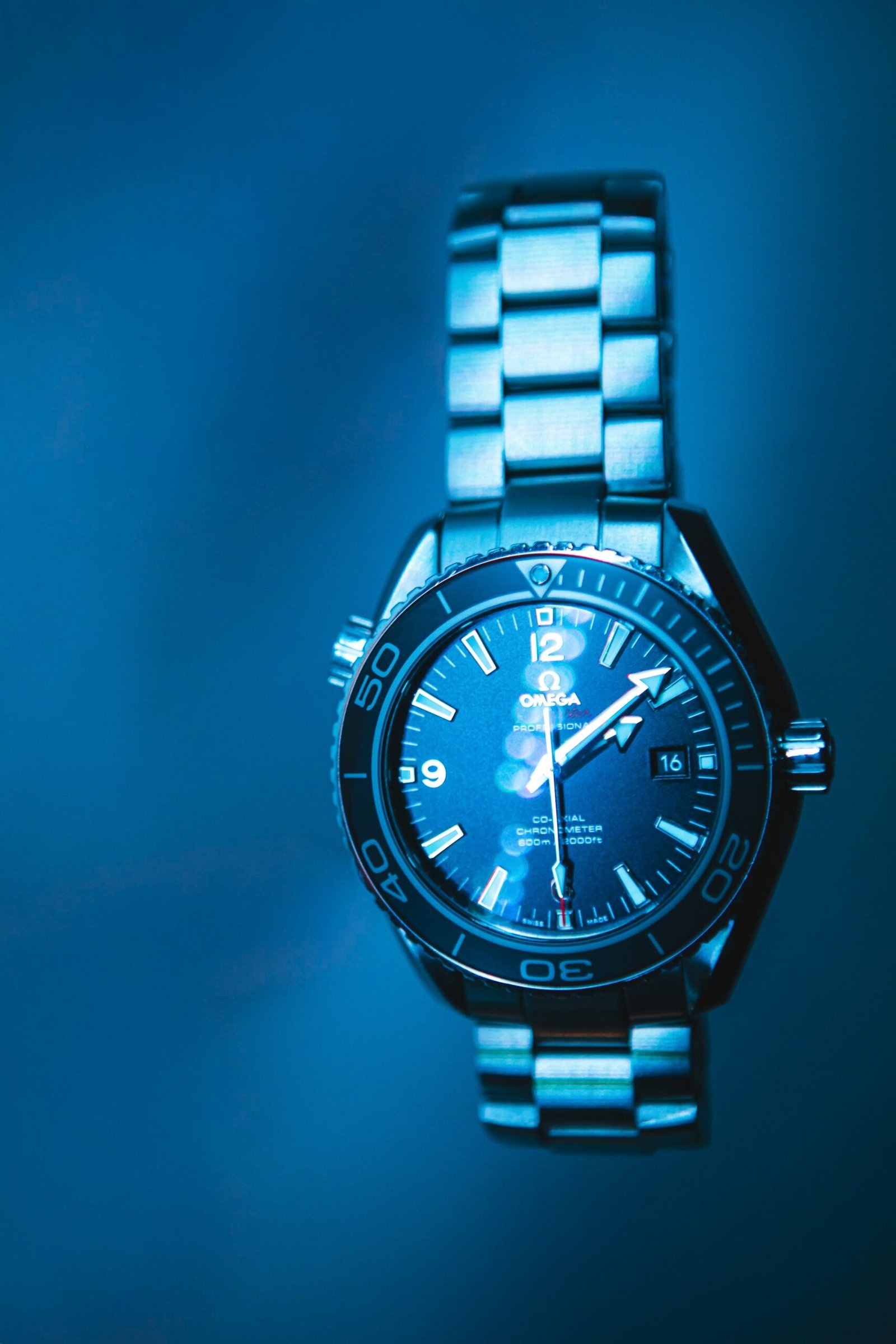
For most of the twentieth century a serious watch had a white, silver or black dial. Blue existed, but it was an accent: the colour of heat-treated steel hands, or of a small sapphire set in the crown.
Somewhere in the past two decades that changed, and blue became the colour of the moment that never ended. Visit any watch fair and you will find it across every price point, from tool watches to high complications.
A blue dial changes with the light, and that is the whole point of it.
Part of the appeal is optical. A sunburst finish, made by brushing the dial in fine lines that radiate from the centre, catches light so that the same blue reads as navy indoors and something close to electric in the sun. A watch that changes as you move your wrist feels alive in a way that a matte black dial does not.
Part of it is practical. Blue sits between formal and casual, works with steel and gold, and goes with almost everything a person actually wears. It is, in other words, the dial for someone who owns one good watch and wears it every day.
Trends end, and this one may too. But a colour borrowed from deep water and evening skies has a better claim than most to being permanent.