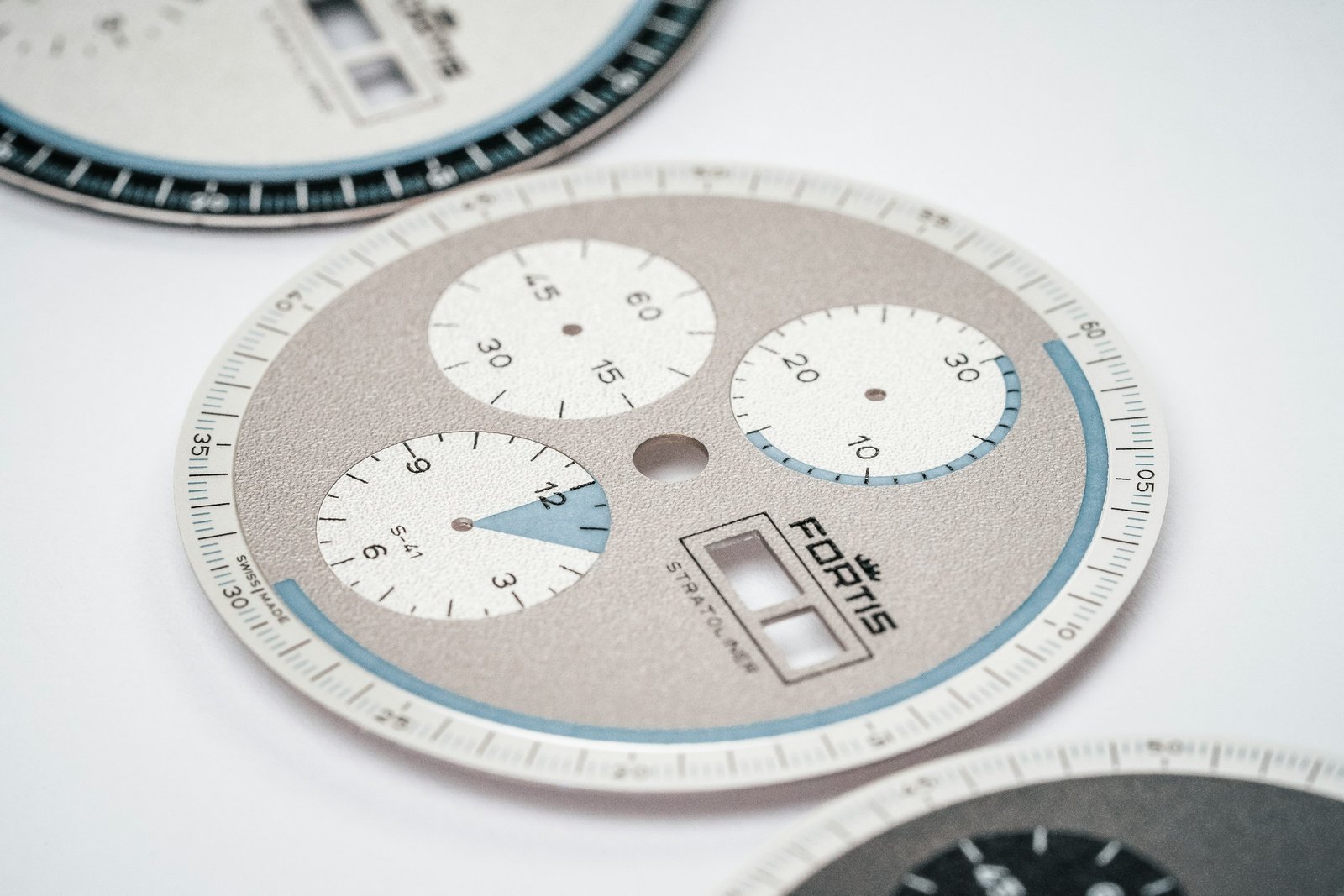
Look closely at a grand feu enamel dial and you see depth rather than colour. The white is not painted on; it is glass, fused to a metal base at temperatures of around 800 degrees Celsius, and it seems to hold light inside it.
Making one is slow and unforgiving. Powdered enamel is laid on a thin plate, fired, cooled and inspected, then laid on and fired again. Each firing risks bubbles, warping or cracks, and a flaw in the final layer means starting over. Workshops that specialise in it will tell you, without much drama, that they throw away a good part of what they make.
An enamel dial is the only part of a watch that can crack in the kiln and ruin a week’s work in a second.
The numerals and tracks are then painted by hand with a fine brush, a few hairs wide, and fired once more. Some workshops go further, into cloisonné, where gold wire outlines each colour, or miniature painting that can take weeks for a single dial.
None of this improves timekeeping. What it gives a watch is something closer to a signature: a surface that will look the same in a hundred years, made by a person whose hand you can almost see in it. For collectors tired of perfection by machine, that is the point.