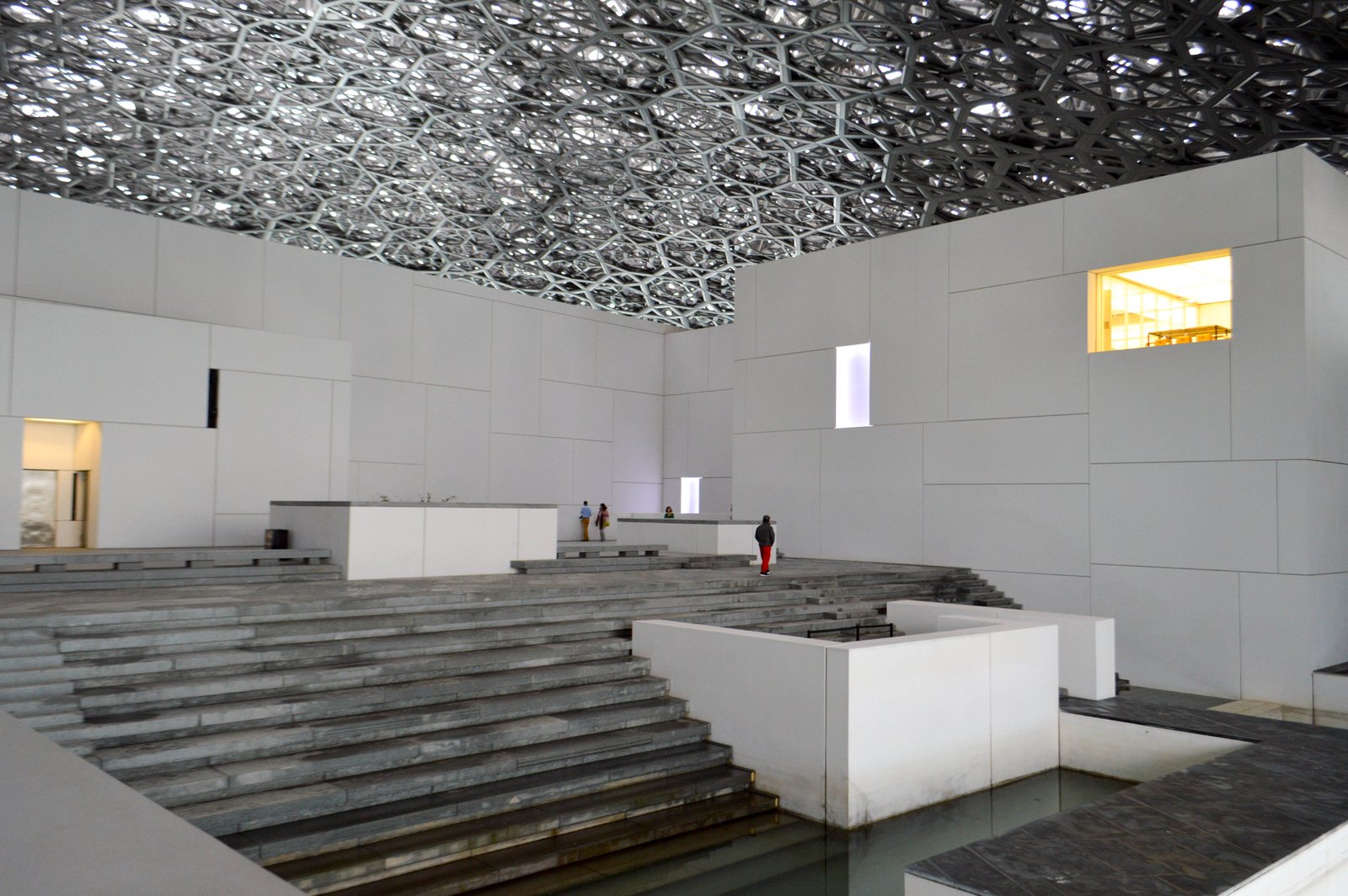
In a hot climate, the most important thing a building can make is shade. Long before air conditioning, the architecture of the region was a sophisticated system for managing sunlight: thick walls, narrow lanes, courtyards, wind towers and, above all, screens.
The mashrabiya is the most beautiful of these. A lattice of turned or carved wood set into a window, it lets air pass and filters the glare, while allowing people inside to see out without being seen. On the floor it casts a pattern that moves slowly through the day.
In a hot climate, shadow is not the absence of design. It is the design.
The idea has never left. The Louvre Abu Dhabi, designed by Jean Nouvel and opened in 2017, sits beneath a vast dome made of layered, perforated patterns. Sunlight falls through it in shifting points, an effect its architect called a rain of light, and the galleries and plazas beneath stay calm and cool.
Good contemporary buildings across the region are rediscovering the same principles. Deep overhangs, perforated façades and shaded courtyards are not nostalgia. They are the most intelligent response to the climate, and they happen to be beautiful.