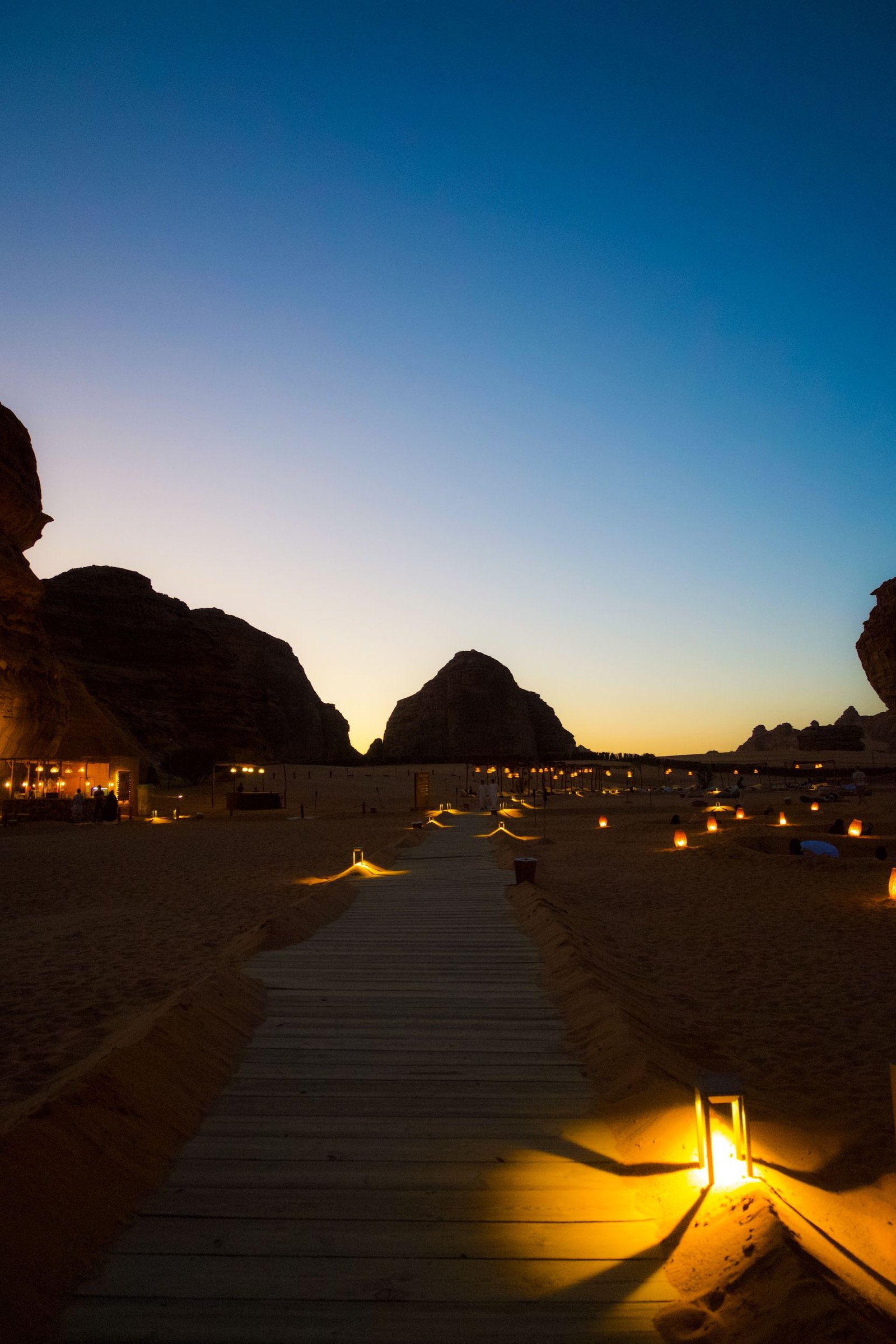
AlUla sits in a long valley in north-west Saudi Arabia, walled in by sandstone that the wind has worked into towers, arches and shapes that look deliberate even when they are not. For most of history this was a place people passed through: a stop on the incense road, where caravans watered at the oasis before moving on.
Three days is not enough to see it properly. It is enough to understand why people now come back.
The valley
The first morning is best spent doing very little. Drive out early, before the heat settles, and the valley floor is still blue with shadow while the cliff tops have already caught the sun. The scale takes time to read. Rocks that look a short walk away are a half-hour drive, and the silence makes distances feel stranger still.
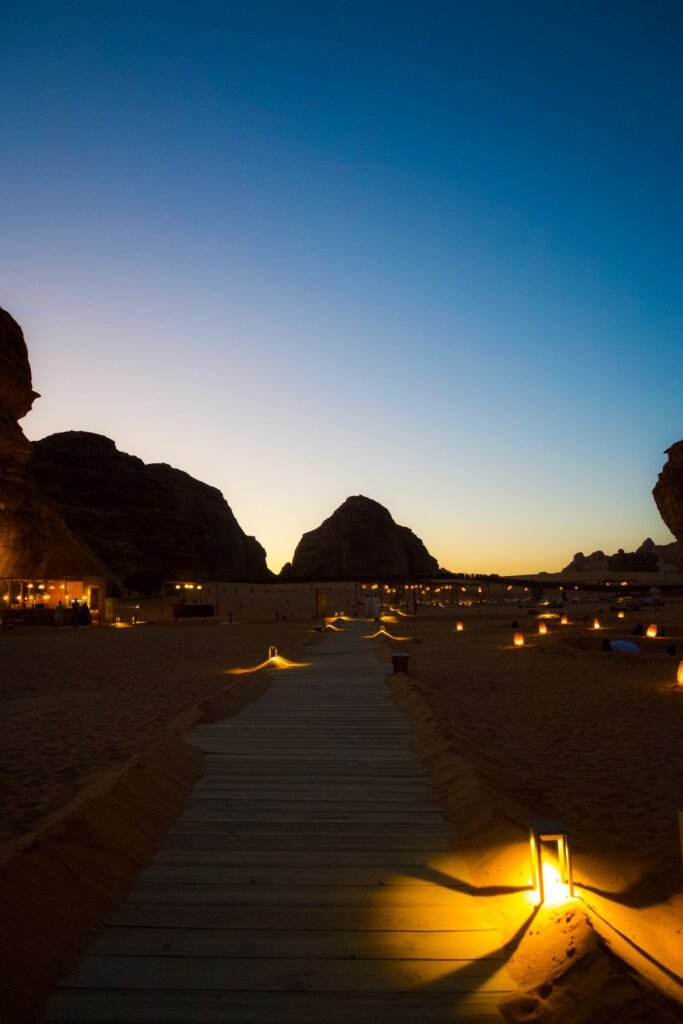
By evening the stone goes through every shade between honey and rust. Locals will tell you to watch Elephant Rock at this hour, and they are right: the arch between its trunk and body fills with the last of the light.
Hegra
Hegra was the first place in Saudi Arabia to be inscribed as a UNESCO World Heritage Site, in 2008. Its tombs were carved by the Nabataeans, the same people who built Petra, and more than a hundred of them survive, cut straight into free-standing outcrops of sandstone.
What surprises you is the precision. The façades were carved from the top down, with no way to correct a mistake, and the stepped crowns and pediments are as crisp as the day they were finished. Inscriptions above some doorways name the people buried inside, and warn against disturbing them.
The façades were carved from the top down, with no way to correct a mistake.
The old town
AlUla’s old town is a maze of mud-brick houses built on stone foundations, lived in for centuries until the last families moved out in the twentieth century. Restored lanes now lead between shaded walls, past doorways barely taller than a child.
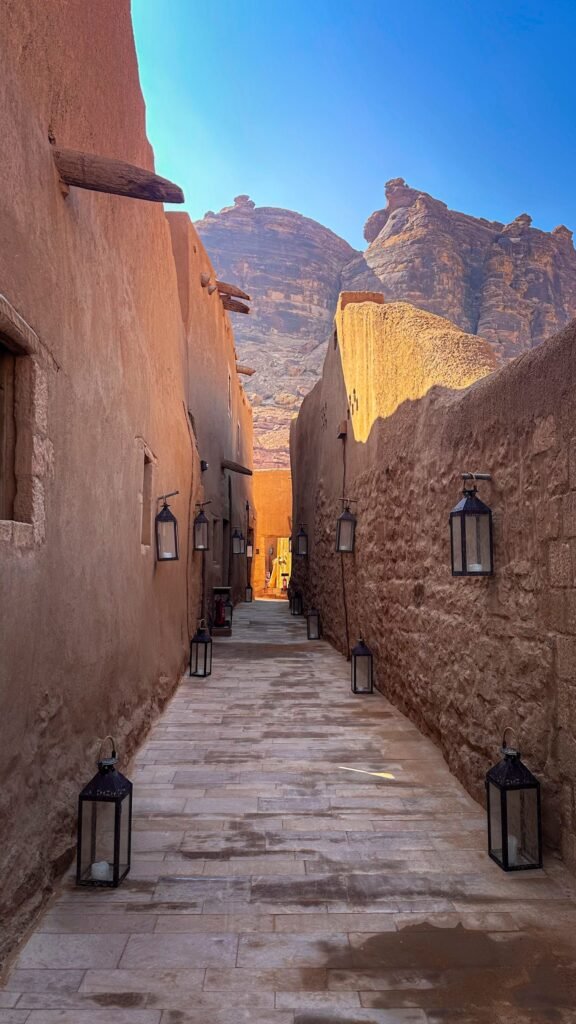
Walk it in the late afternoon, when the lanes are cool and the palm groves of the oasis are close enough to smell. It is the most human place in the valley, and the best reminder that people made a life here long before anyone came to look at it.
Maraya
Then there is Maraya, a concert hall wrapped entirely in mirrors and set in a side valley among the rocks. Guinness World Records recognised it as the largest mirrored building in the world, but the record is beside the point. From a distance it barely exists: it simply returns the cliffs and the sky to you.
After dark
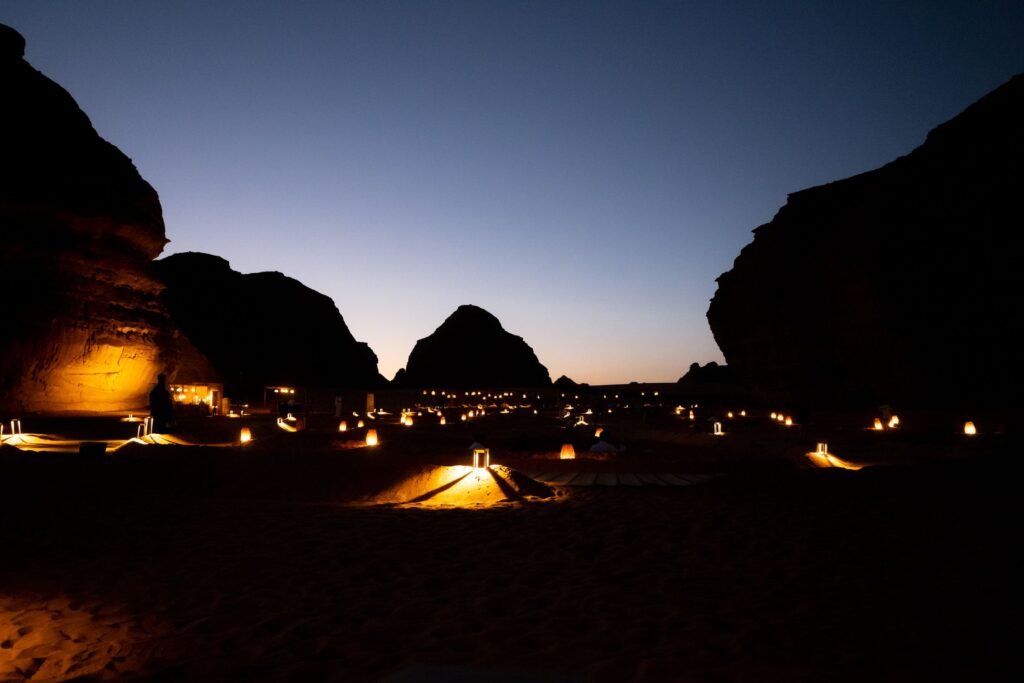
The final evening belongs to the sky. Away from the lit roads, the valley goes properly dark, and the stars arrive in a way city dwellers forget is possible. Someone will light a fire; someone else will make coffee with cardamom.
It is tempting to call AlUla timeless. It is more accurate to say that it keeps its own time, and that three days is just long enough to start keeping it with it.