Cartier has unveiled Into the Wild, a collection of jewellery that places a new cast of animals beside the house’s famous panther. The reports of 1 September 2026 name a tiger, a parrot, a carp, a crocodile and a rhinoceros, set in sapphire, onyx and gold made to move. Neither of the sources read for this story gives a launch date, a piece count or prices.
For the Gulf, where the Cartier panther is among the best-known emblems in luxury, the news is also a reminder of how long the house has been telling stories with animals.
The tiger in blue
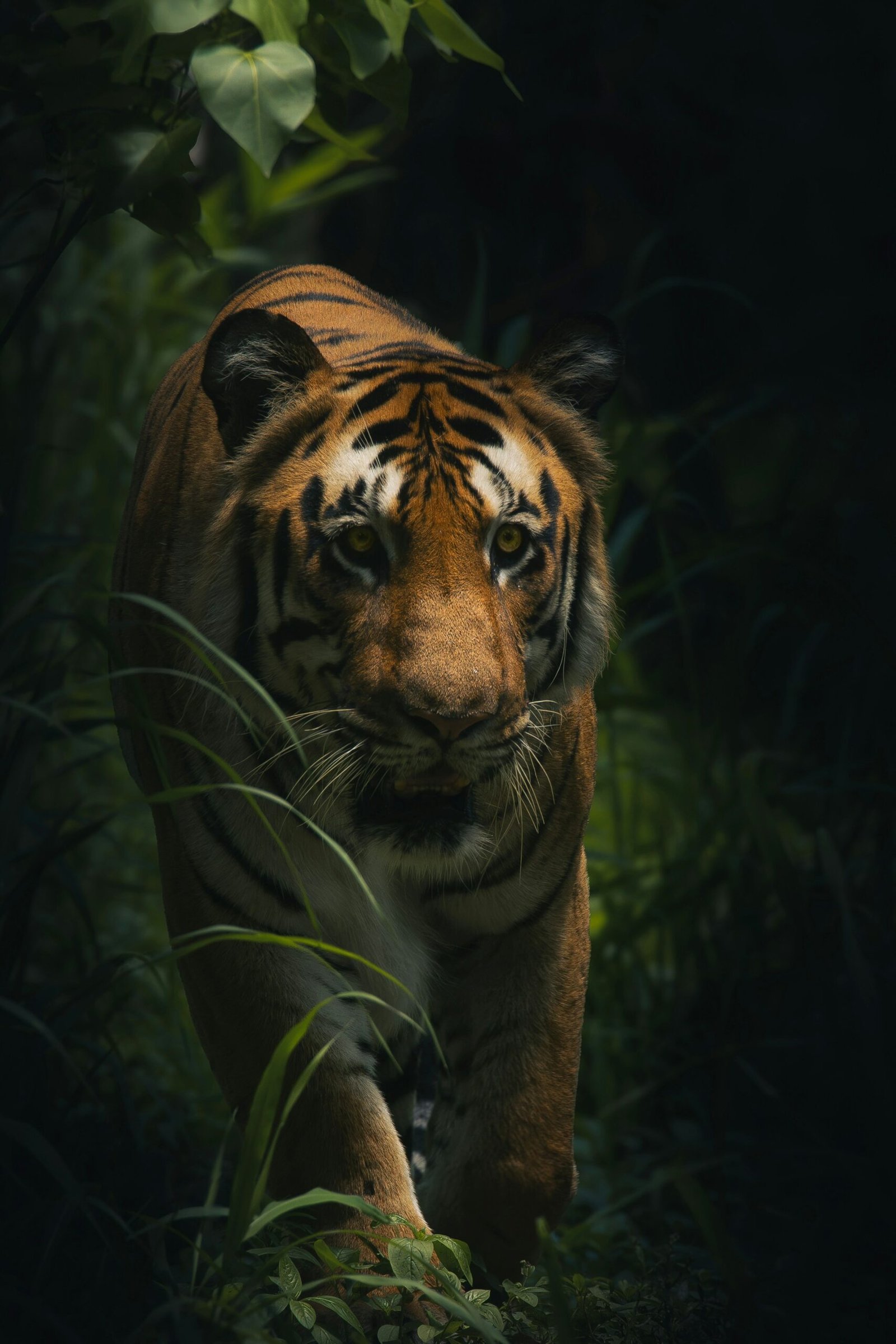
The tiger is the clearest statement. According to Harper’s Bazaar India, the Tiger bracelet and necklace are worked in deep and icy blues. Carved dumortierite quartz forms the stripes, sapphires cover the head and body, and the eyes are aquamarine. The head is paved with diamonds in a graphic setting that gives the effect of galuchat, the textured leather made from ray skin.
The body is a fully articulated gold structure, with chalcedony beads set with sapphires, so the animal can curve around the wrist or the neck. The clasp is hidden in the tiger’s mouth. Harper’s Bazaar India compares the grandeur of the set with what is expected of Cartier high jewellery, though the house has not been quoted placing the collection in either fine or high jewellery.
The wider cast
The tiger is not alone. Harper’s Bazaar Arabia describes a Faune & Flore de Cartier necklace in white gold, with onyx, chrysoprase, rubellites, tsavorite, garnets, emeralds and diamonds. A Panthère de Cartier necklace and earrings are in rose gold, with obsidian, emeralds, onyx and diamonds, so the panther keeps its place in the line-up.
There is also a capsule of rings, one each for the tiger, parrot, carp, crocodile and rhinoceros. They echo the Panther head ring that Cartier made in the 2000s, so the animals are reduced to a single, bold face.
How the animals move
The techniques are what separate these pieces from decoration. Harper’s Bazaar Arabia lists Cartier’s fur setting, rail settings and articulated parts. Because of the articulation, the crocodile’s jaw and the panther’s crossed paws move. A jewel that responds to the body that wears it is a mark of craftsmanship, since each hinge must be made so that it opens and closes without disturbing the line of the stones.
A bestiary with a century behind it
The collection draws on a long history, and the house is keen to tell it. According to Harper’s Bazaar Arabia, the panther first appeared in 1914 as a fur pattern of black onyx spots set among diamonds on a timepiece. Jeanne Toussaint, who became Cartier’s creative director in 1933 and was nicknamed La Panthère, made it the house’s lead character.
In 1948 Toussaint developed the panther in three dimensions. Among the pieces, the Duke of Windsor commissioned a yellow-gold panther on an emerald cabochon, according to both Harper’s Bazaar publications. In the late 1960s the actress María Félix commissioned a necklace of two crocodiles in Fancy Intense Yellow diamonds and emeralds, which gives today’s crocodile a direct ancestor.
Earlier still, Jacques Cartier’s travels in the East in the early twentieth century brought tigers, snakes, elephants and insects into the house’s designs. Harper’s Bazaar India adds that the menagerie began in the early 1900s with birds and insects, then grew to include reptiles, felines, chimeras, the zebra and the elephant.
Why this animal, not that one
Pierre Rainero, Cartier’s Director of Image, Style and Heritage, told Harper’s Bazaar Arabia that Cartier’s fauna is distinguished by its character. Choosing an animal, he said, becomes an opportunity to deliver a message about yourself. It is a useful way to read the collection: each animal, in his account, is a choice that says something about the person who wears it.
Harper’s Bazaar Arabia’s account of the collection reads as promotional, so the details above are attributed to the outlet that reported them.
What to watch
Collectors will be looking for the details the sources do not yet give: how many pieces exist, how they are priced and whether they sit in the fine or high jewellery range. Until Cartier publishes them, the story is one of intent. The house is returning to the animals it has drawn on since the early twentieth century and pairing them with techniques such as articulated gold and fur setting that make its jewels move.
For a region that has long favoured jewellery with character, that combination of a recognisable emblem and a fresh cast is likely to hold interest well beyond the season.
Sources: Harper’s Bazaar India, Harper’s Bazaar Arabia