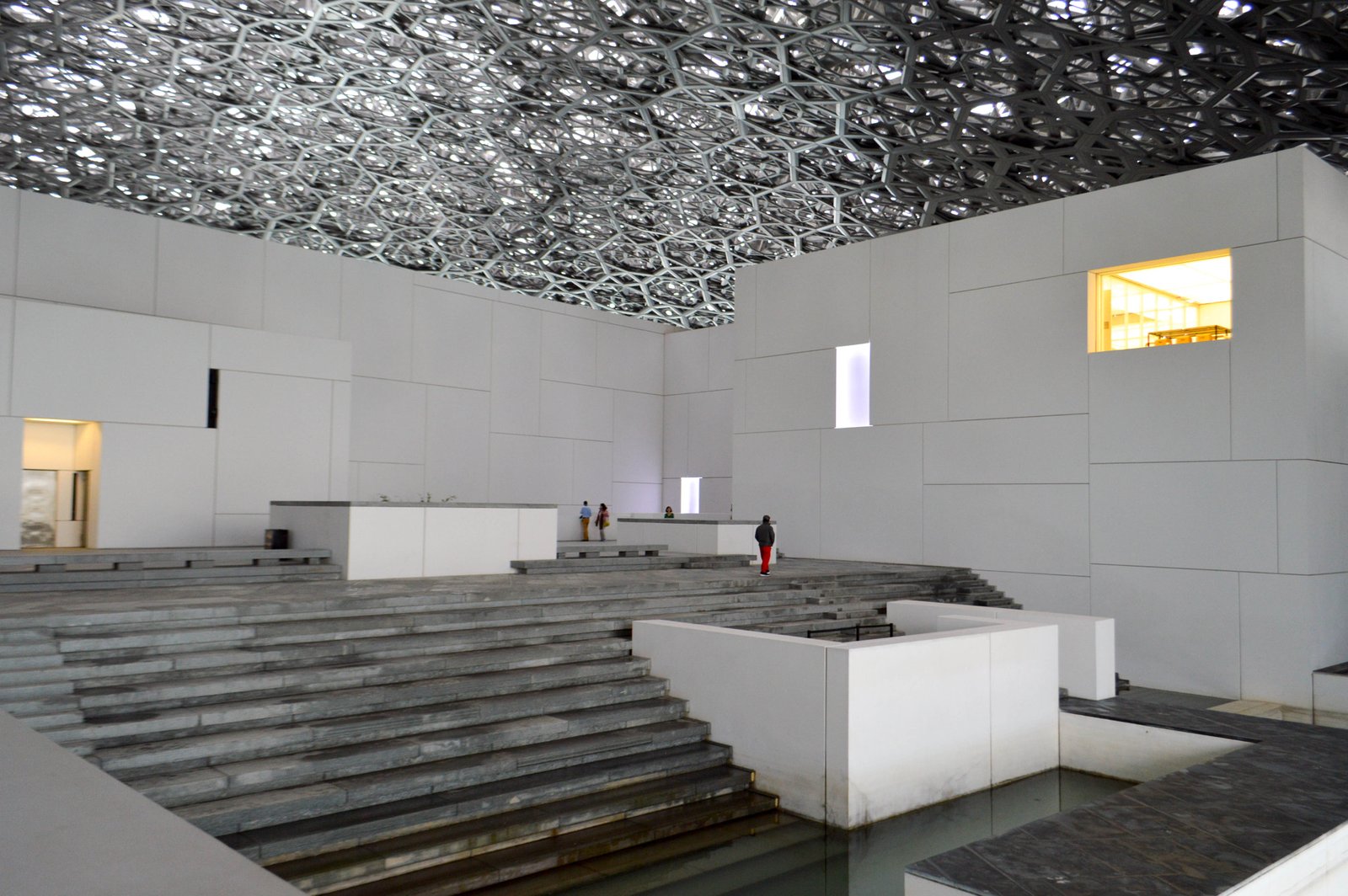
The interiors shortlist for Dezeen Awards 2026, published on 22 September, puts Gulf design in direct competition with the strongest work of the year. Dubai-based Agata Kurzela Studio is shortlisted in the exhibition design category for its work at the Zayed National Museum in Abu Dhabi. Studio Pheasant is in the running for Gooder, a large retail interior in Dubai, and Cambra Buró for Plinth House, a large residential interior in Hasaniya, Kuwait. Verhaal, the studio behind Kumo in Dubai, has a second Dubai interior on the list.
The shortlists came out over three days, according to Dezeen, which both organises the awards and publishes the results. Architecture came first, on 21 September. Interiors followed with 112 projects in 14 categories, and design on 23 September with 128 projects in 16 categories. In all, 392 entries were shortlisted from more than 4,300 projects submitted from 91 countries. A master jury has already met in London to choose 49 winners, which will be revealed on 16 November at the Dezeen Awards party at the Royal Opera House.
For a region that has invested heavily in museums, hotels and shopping streets, the list is a useful measure. The categories are global, so these Gulf interiors are being judged on the same terms as projects from every other part of the world, not in a regional class of their own.
A museum interior shaped by Emirati makers
The Zayed National Museum opened in Abu Dhabi’s Saadiyat Cultural District in December 2025, in a building by Foster + Partners. Inside, Agata Kurzela Studio was commissioned to design and curate the interior spaces and their furniture. The practice was founded in 2020 by the Polish-born architect and interior designer Agata Kurzela.
Writing in March, Wallpaper described a sand-toned palette of local materials: wool, rope, ceramic, camel leather, metal and stone. The studio brought in Emirati designers, among them Aljoud Lootah, Abdalla Al Mulla, Omar Al Gurg, Roudha Al Shamsi and Khalid Shafar, while Irthi, the Sharjah-based craft council, contributed woven safeefah cushions. Several meeting rooms and majlis spaces follow Al Durour, the traditional Emirati calendar of seasons, so that one room evokes the hottest days of summer and another the cool of winter.
The museum is also on the shortlist of the World Architecture Festival 2026, which is scheduled to take place in Fort Lauderdale from 18 to 20 November, two days after the Dezeen ceremony.
A regional showcase from Sharjah to Rabat
Earlier in September, Dezeen added a new strand to the programme. On 9 September its editors published a Regional Showcase of 50 projects from Europe, the Middle East and Africa, chosen from the entries of the 91 countries that took part this year. It sits alongside the shortlists rather than replacing them.
The Gulf is well represented. From Sharjah comes the Abaya Pavilion by LYYH Studio. Doha has two entries: the Al-Mujadilah Center and Mosque for Women by the New York practice Diller Scofidio + Renfro, and Palate by TB.D Studio. Dubai also has two, Kumo by Verhaal and Yu & Mi by LW Design.
Kuwait features twice, with Chops by Lines in Kuwait City and Plinth House by Cambra Buró in Hasaniya, which also appears on the main interiors shortlist. Further west, the selection includes Father & Bun by Atelier130 in Beirut and Story Le Carrousel by Roar in Rabat. Taken together, the list reads as a quick map of where interior design in the Arab world is busiest: cafés, restaurants, homes and places of culture.
The judges
The master jury was announced on 17 September. Its architecture panel brings together Ma Yansong, Daniel Libeskind, Aziza Chaouni, Dominique Petit-Frère and John Cummins. Chaouni, a Moroccan architect from Fez, is known for heritage and river-restoration work in her home city, and she gives North Africa a voice at the table.
The interiors panel is made up of Jaime Hayon, Wendy Saunders, Benni Allan, Julien Sebban and Smita Thomas. The design panel includes Martin Lotti, chief design officer at Nike, with Jo Barnard, Michael Anastassiades, Min Chen and Alexie Sommer.
Two of the judges have already said what impressed them. Petit-Frère told Dezeen that “this year’s projects reflect a generation of designers thinking more critically about context, materiality, technology”. Lotti said that “the strongest projects weren’t simply beautiful”, and that they were “purposeful, distinct and challenging the status quo”.
What comes next
Context and materiality run clearly through the Zayed National Museum’s interiors, with their local wool, stone and camel leather, and their rooms arranged around the Emirati seasons. That is exactly the kind of thinking Petit-Frère describes.
The winners will be named in London on 16 November. Until then, the shortlist is itself a signal. Gulf museums, shops and homes are being judged on the same terms as projects anywhere else, and a growing number of them are holding their own.
Sources: Dezeen, Dezeen, Dezeen, Dezeen, Wallpaper*, e-architect