Foster + Partners has extended the Bilbao Fine Arts Museum in northern Spain with Agravitas, a bridge-like steel gallery that rises over the museum’s historic buildings, Dezeen reported on 6 October. According to Dezeen, the elevated gallery is about 55 metres long and straddles the existing museum without touching its original fabric. The project was carried out with the local architect Luis María Uriarte.
The extension spans the U-shaped museum’s existing buildings and a former outdoor space at the centre of the complex. As part of the work, the existing buildings were restored, and the museum’s original 1940s entrance has reopened for the first time in decades. Dezeen’s report does not give an opening date or a cost for the new gallery.
Norman Foster, who founded the practice, framed the project in terms of time. "This project is about bridging the past, present, and the future," he said, as quoted by Dezeen. He also spoke of "remaining respectful of the site’s storied history", a phrase that describes the design’s central move: to add a great deal of new space while leaving the old buildings untouched.
A gallery that floats
The idea is simple to describe and difficult to build: a new gallery lifted clear of the old one, so that the historic buildings below can stay as they are. According to Dezeen, Agravitas is built from locally produced steel, including large V-shaped columns. At ground level, a glazed facade encloses a hall for sculpture beneath the new structure.
The upper level holds column-free galleries. Their skylights can admit daylight or be blacked out, a flexibility that museums value, since some works are best seen in natural light and others must be kept from it. New office space and roof terraces with views across the city complete the brief. Overhanging roofs shade the building from the sun, and photovoltaic panels cover the roof to generate electricity.
The engineer on the project was Julio Martínez Calzón, founder of MC2 Estudio de Ingeniería, who died in 2023. A 55 metre steel span that touches nothing beneath it is first of all a feat of engineering, and his name sits beside Foster’s in Dezeen’s account of the work.
This project is about bridging the past, present, and the future
Norman Foster, founder, Foster + Partners
Steel in a steel city
The choice of local steel carries meaning in Bilbao. The city, the largest in Spain’s Basque Country, grew in the 19th and 20th centuries on iron mining, steelmaking and shipbuilding along the Nervión river. Building a new gallery from steel produced in the region ties it to that industrial history.
It also sets up a clear contrast between old and new. The original buildings stay on the ground, restored, while the new gallery reaches across them on large V-shaped steel columns. The past keeps its place, and the new work passes over it rather than replacing it.
The Bilbao effect
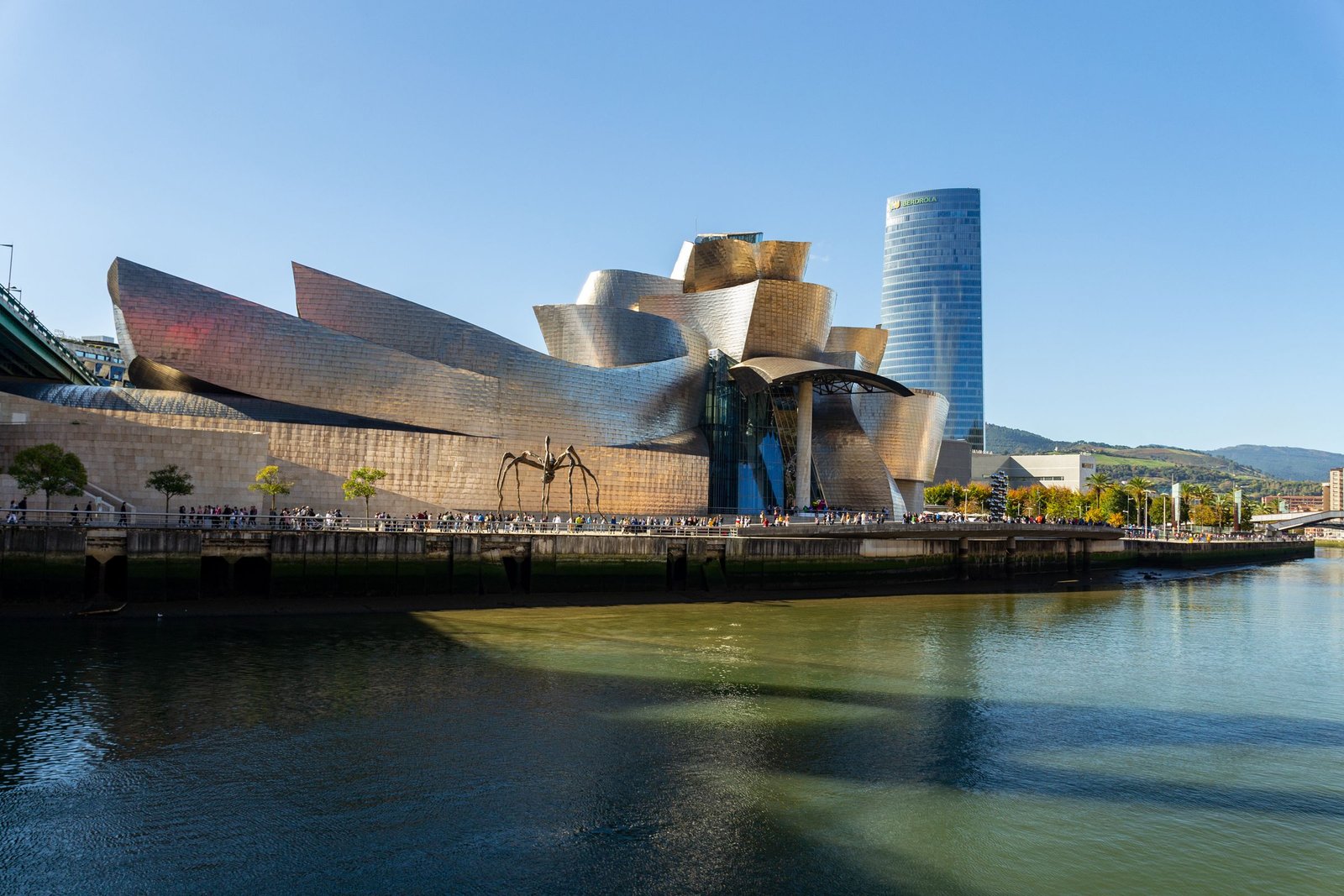
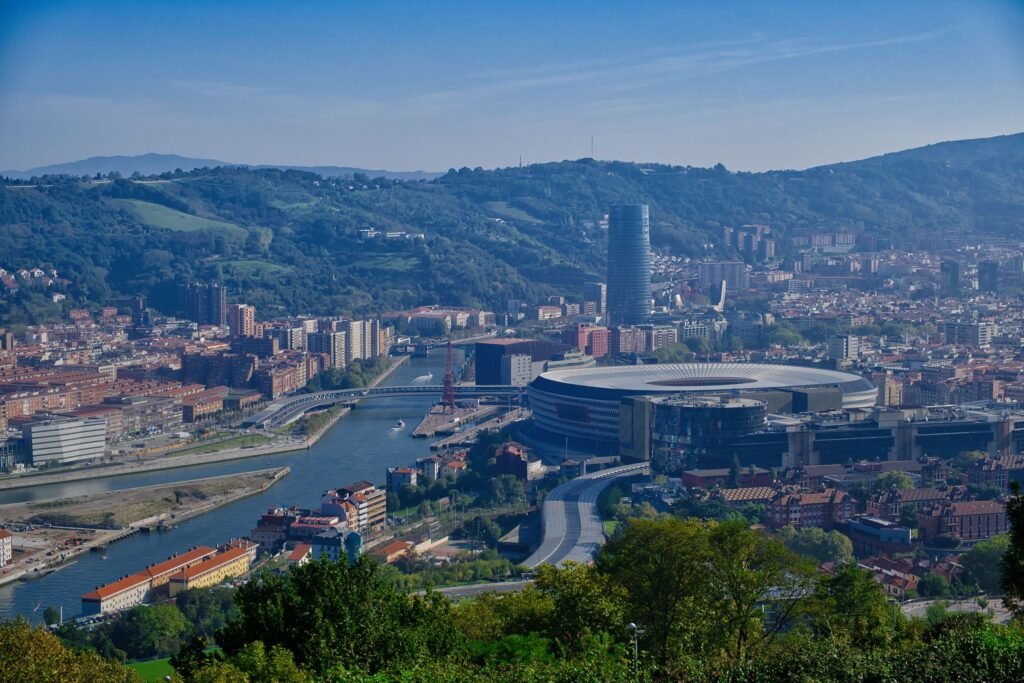
Bilbao’s place in modern architecture was sealed in 1997, when Frank Gehry’s Guggenheim Museum Bilbao opened on the banks of the Nervión. Its curving titanium forms drew visitors from around the world and gave rise to a phrase, the "Bilbao effect", for the way a single striking cultural building can change a city’s fortunes.
The Fine Arts Museum is the older of the two institutions, and Agravitas takes a different path to the Guggenheim. Where Gehry’s museum made its name as a sculptural landmark, Foster’s extension makes its point by not touching the buildings it serves. In the city that gave its name to the Bilbao effect, the newest museum building is defined as much by restraint as by spectacle.
From Bilbao to Abu Dhabi
For readers in the Gulf, the story has two connections. The first is the architect. Foster + Partners designed the Zayed National Museum in Abu Dhabi, whose roof, as Architectural Record has described it, is defined by splayed solar chimneys. The practice also drew up the masterplan for Masdar City in Abu Dhabi. The shading roofs and solar panels in Bilbao reflect the same attention to sun and energy that marks its work in the Emirates.
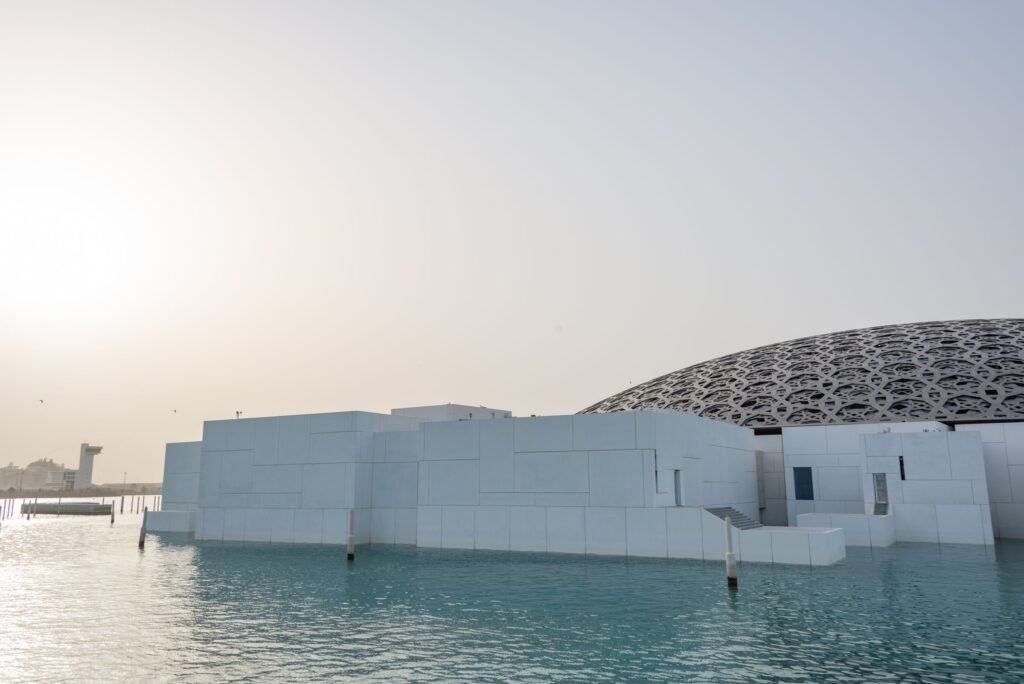
The second is the Guggenheim. Abu Dhabi’s Department of Culture and Tourism has said that Frank Gehry’s Guggenheim Abu Dhabi will open on 11 December 2026, on Saadiyat Island, where the Louvre Abu Dhabi and the Zayed National Museum also stand. Nearly three decades after Bilbao, the museum that made the city famous is due to gain a counterpart in the Gulf.
What comes next
Dezeen’s report does not say when the public will be able to visit the new galleries, so travellers planning a trip to Bilbao should check with the museum before they go. In Abu Dhabi, the calendar is clearer, with the Guggenheim scheduled to open on 11 December.
Between the two cities, Foster’s bridge in Bilbao offers another model of what a museum building can do: connect what is already there rather than compete with it.
Sources: Dezeen, Architectural Record, AE World