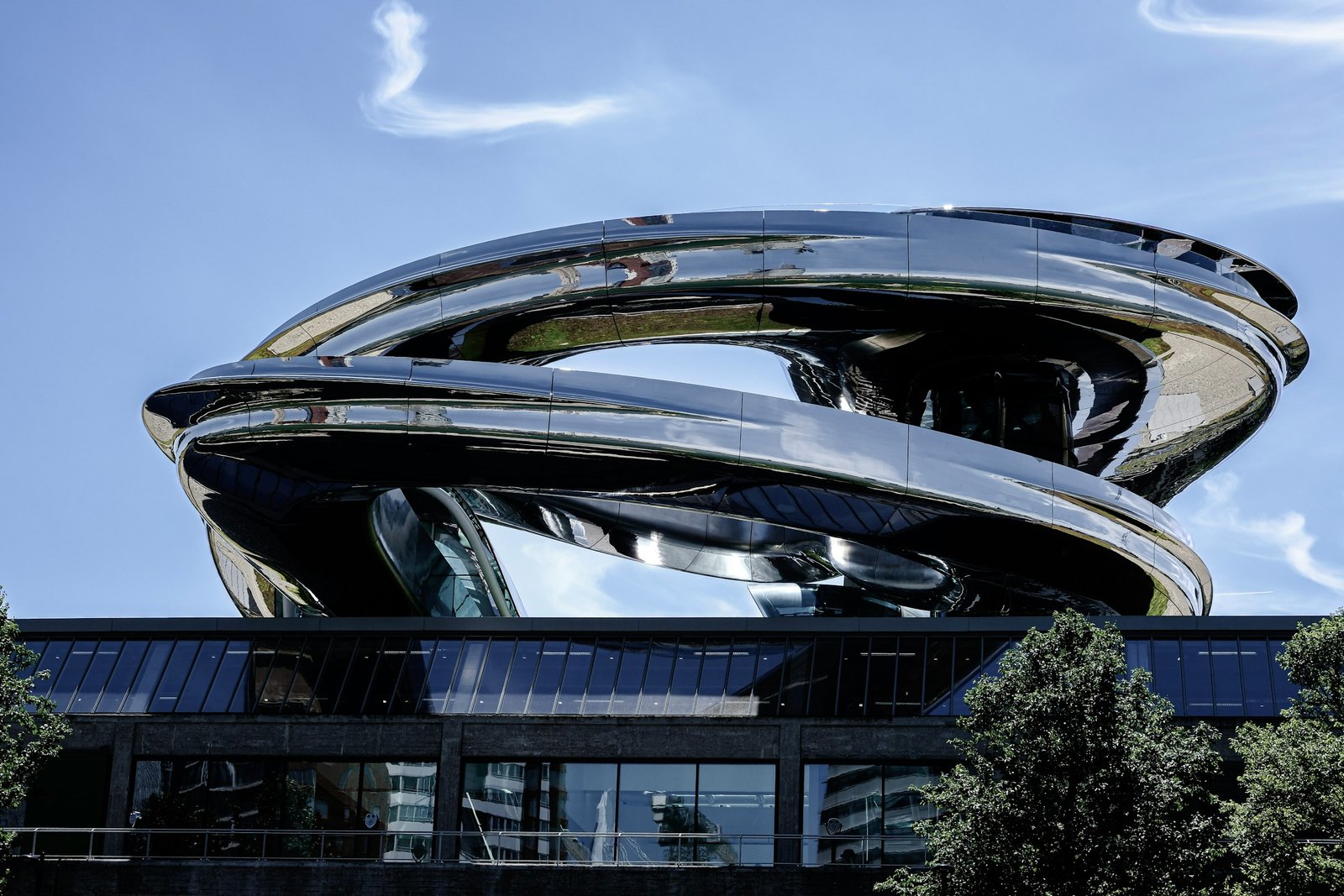
Tickets for Guggenheim Abu Dhabi went on sale on 18 September 2026, less than three months before the museum opens to the public on 11 December. Standard adult admission is Dh70, and entry is free for several groups of visitors, among them UAE citizens and residents aged 60 and over.
The sale follows the appointment, on 4 August, of Valerie Hillings as the museum’s inaugural director and chief executive. Together the two announcements turn a project first agreed in July 2006 from a long promise into a countdown.
This is a long read on what is arriving on Saadiyat Island: the largest museum in the Guggenheim network, designed by Frank Gehry, and a collection owned by the government of Abu Dhabi and built since 2009.
Tickets, prices and free entry
Tickets are sold through the museum’s website. Standard adult admission is Dh70. Admission is free for visitors under 18, for students at UAE universities, for UAE citizens and residents aged 60 and over, and for people of determination, who receive a complimentary companion ticket. Students must show ID, and their tickets are collected on the day. Children aged 12 and under must be accompanied by an adult.
Two discounted categories sit between the free and the full price. Educators employed in the UAE and members of the UAE military and Homat Al Watan pay Dh35. Fazaa and Esaad cardholders pay Dh50. The National reported the full list when sales opened.
WAM, the Emirates news agency, reported the start of ticket sales on 19 September and confirmed the public opening on 11 December 2026. The date itself was announced by the Department of Culture and Tourism Abu Dhabi (DCT) on 28 July.
The department’s chairman, Mohamed Khalifa Al Mubarak, described the museum as a civic space, according to The National. He also spoke of plans for music, food, dance and contemporary art alongside the collection, which suggests a place meant to be visited for more than a single walk through the galleries.
The director who has seen it from the start
DCT named Valerie Hillings as the museum’s inaugural director and chief executive on 4 August. She will oversee the opening exhibitions, the public programmes and the final preparations for launch.
Her connection to the project is long. From 2009 to 2018 she was curator and associate director of curatorial affairs for the Guggenheim Abu Dhabi project at the Solomon R. Guggenheim Foundation, working on collection strategy, acquisitions and the development of the building. Since 2018 she has directed the North Carolina Museum of Art, where, according to The National, she acquired about 400 works and doubled annual attendance to 1.2 million. She holds a doctorate in art history from the Institute of Fine Arts at New York University and a degree from Duke University.
On her appointment, Hillings said she was honoured to return to Abu Dhabi to complete the once-in-a-lifetime journey of founding and opening the museum. She added that she looked forward to welcoming local and global audiences to the building Gehry designed.
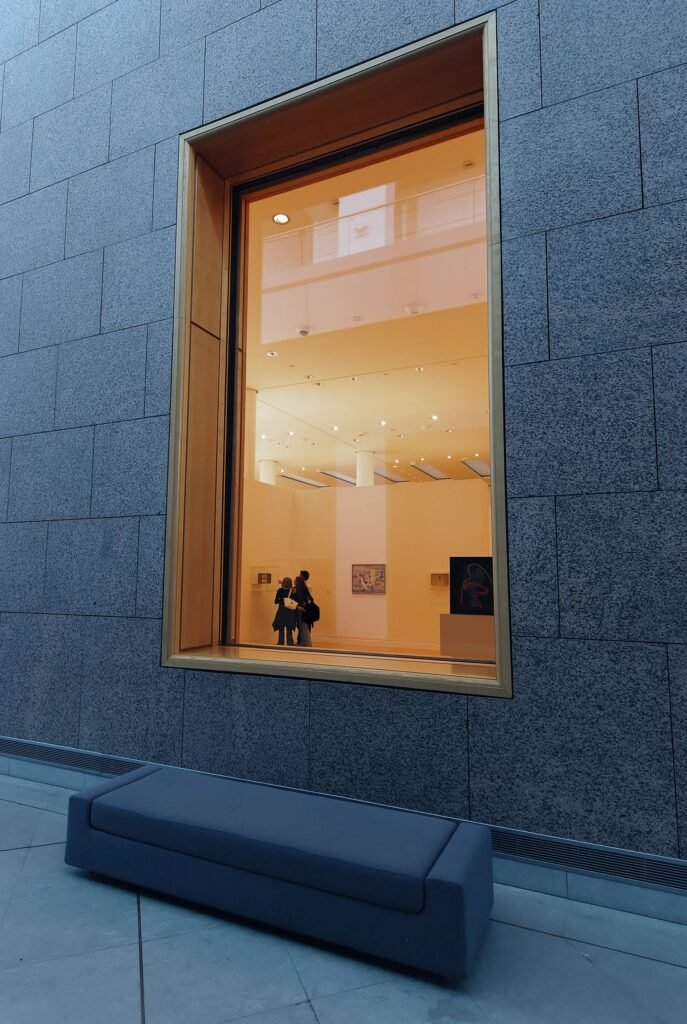
A building made of cones
Gehry’s design is, by the figures reported, the largest museum in the Guggenheim network. The built-up area is about 80,000 square metres, of which 11,600 square metres are indoor galleries. A further 23,000 square metres are given to outdoor exhibition space, a generous allowance in a climate where shaded outdoor rooms can be used for much of the year.
Frank Gehry, the Pritzker Prize winner, is referred to as “the late” in WAM’s report and in designboom, which means the building opens after his death. Designboom calls it his largest museum to date.
The most visible feature is a cluster of ten sculptural cones that rise to as much as 88 metres. They provide shade and natural ventilation, which gives the form a practical job as well as a striking silhouette. Nine are clad in stainless-steel mesh. The tenth is clad in onyx and glass.
Inside, nearly 30 galleries are arranged around a central atrium. Sources differ on the exact count: The National and Finestre sull’Arte say 30, while WAM and Gulf News say 28. Readers will want to treat the number as approximate until the museum publishes its own plan.
Gehry’s earlier Guggenheim Museum Bilbao, which opened in 1997, became a byword for culture-led urban renewal, a phenomenon sometimes called the Bilbao effect. Abu Dhabi’s version has a different setting, a purpose-built cultural district rather than a post-industrial city, but the ambition to give a place a signature building is familiar.
A collection assembled for this place
The collection has been built since 2009 and covers art from the 1960s to the present day. It spans painting, sculpture, installation, photography, moving image and new media. The galleries are organised around themes, among them Abstractions, Popular Culture, Land, Language and Storytelling, rather than a strict march through movements and dates.
Among the artists previously announced for the collection are Jackson Pollock, Mark Rothko, Andy Warhol and Jean-Michel Basquiat. Gulf News notes that the collection is owned by the Abu Dhabi government and not by the Guggenheim Foundation, a point that distinguishes this museum from its sister institutions in New York, Venice and Bilbao.
Figures for the size of the collection vary between sources. Earlier official statements spoke of more than 600 works, while more recent accounts cite more than 970 works by over 400 artists from more than 70 countries. Until the museum gives a single figure, it is safer not to quote one.
The opening exhibitions and a full list of works on display had not been released as of late September, according to Gulf News. For now, the themes and the artist names are the clearest guide to what visitors will find.
Gulf and Arab artists beside the canon
The detail that matters most for readers in the region is who hangs next to whom. Gulf News lists regional artists in the collection, among them the Emirati artists Hassan Sharif, Mohammed Kazem and Ebtisam Abdulaziz, together with Monir Shahroudy Farmanfarmaian, Samia Halaby, Rachid Koraïchi and Susan Hefuna.
That is a deliberate statement. A museum that sets Pollock and Rothko beside Sharif and Kazem is saying that the story of art since the 1960s was not written in one place only. For a collector or student in the Gulf, it means the national and regional canon will be seen in the same rooms as the Western names they know from textbooks.
How the pairings will work in practice is not yet public. The themes, such as Land, Language and Storytelling, are broad enough to hold works from many places, and that breadth may be the point. The first exhibitions will show whether the regional artists are woven through the galleries or gathered in a section of their own.
Saadiyat’s season of museums
Guggenheim Abu Dhabi is the fourth Guggenheim museum after New York, Venice and Bilbao. In Abu Dhabi it joins Louvre Abu Dhabi, Zayed National Museum, Natural History Museum Abu Dhabi and teamLab Phenomena Abu Dhabi in the Saadiyat Cultural District. Louvre Abu Dhabi, the first of them, opened in November 2017.
The opening comes at the end of an art-heavy autumn on the island. Frieze Abu Dhabi is scheduled for 19 to 22 November 2026 at Manarat Al Saadiyat, three weeks before the Guggenheim opens its doors. For visitors planning a trip, November and December now make a natural pairing of fair and museum.
Twenty years, in short
The history helps explain the weight of the date. The agreement was signed in July 2006. Construction began in 2011, stalled, and resumed in earnest in 2019. The December opening date was confirmed in July 2026. Few cultural projects in the region have been so visibly public for so long, and few have had to wait so patiently to be judged.
The cost is another matter on which the record is thin. Gulf News reports a figure of around $1 billion but notes that no official total has been published, so it is better treated as an estimate than as a fact. What can be said with confidence is that the project has outlasted several chapters of the region’s cultural story, from the opening of Louvre Abu Dhabi in 2017 to the arrival of new museums beside it, so that it now opens in a district that already has a museum culture of its own.
Mariët Westermann, director and chief executive of the Solomon R. Guggenheim Foundation, said in July that the museum would be a source of wonder, a hub of connection and a place of curiosity and joy. Whether it becomes that will depend on the programme as much as the architecture.
What to watch before December
Three things remain to be learned. The first is the opening exhibitions, which have not been announced. The second is the final gallery plan, which should settle the question of the exact number of rooms. The third is how the museum uses its outdoor space and its stated plans for music, food and dance.
For now, the practical steps are simple. Tickets can be bought on the museum’s website. Students, residents aged 60 and over and others who qualify for free entry should check what they need to bring on the day. And anyone travelling to Abu Dhabi in the autumn has two good reasons to go: the fair in November, and the museum in December.
Sources: The National, The National, Emirates 24|7 (WAM), Gulf News, Finestre sull’Arte, designboom