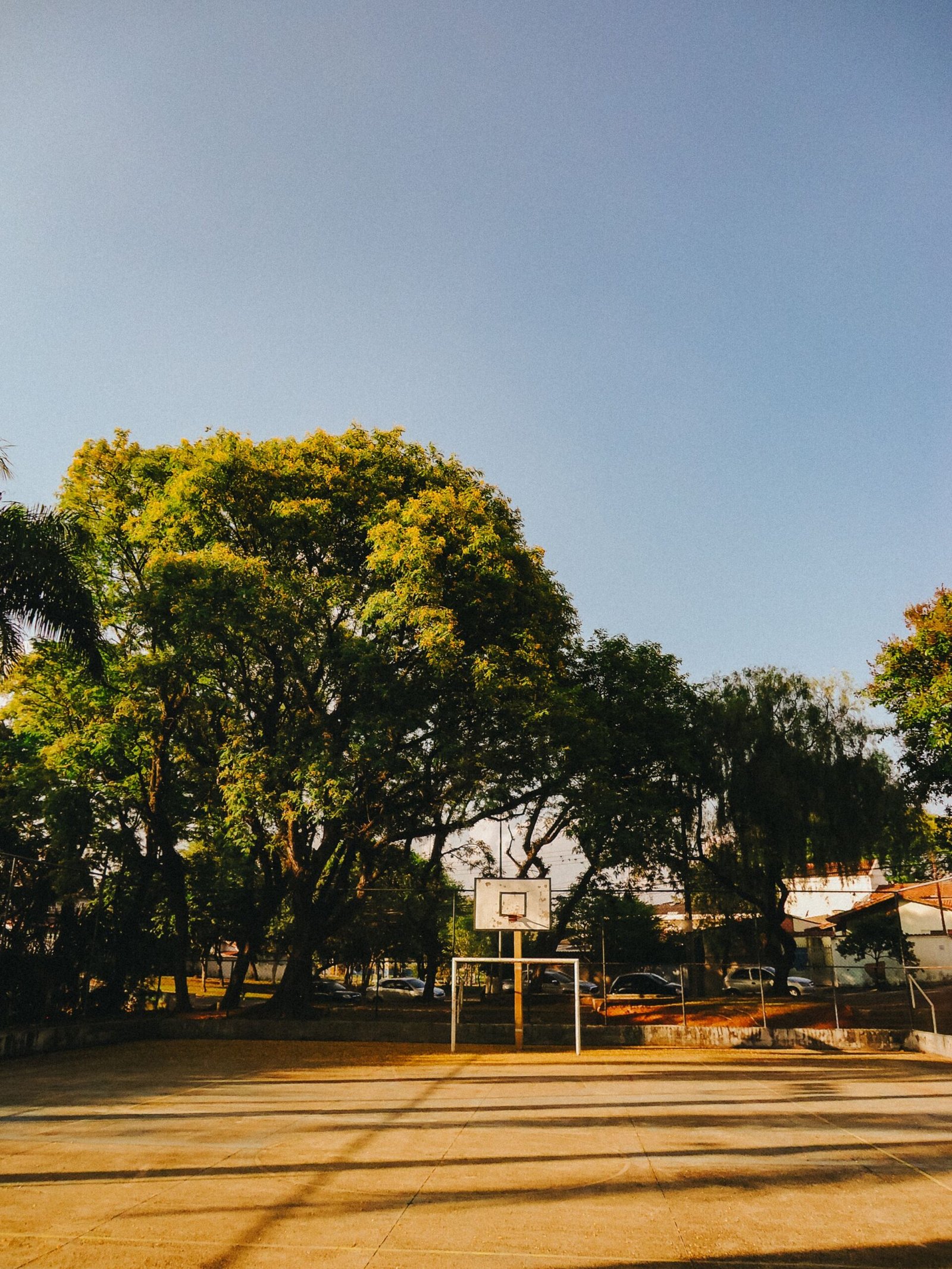
Amman Design Week will leave something solid behind when it closes on 17 October. According to Yanko Design, the 2026 edition is installing four permanent public works in the Jordanian capital: a ceramic-tiled shade roof and a basketball court in Ras El Ain Park, a street intersection rebuilt from stone waste, and a sculptural lamp post.
Design weeks usually live in exhibitions that are packed away when the last visitor leaves. These four pieces are built to stay in daily use, in a public park and on a city street, long after the festival programme has ended.
The works sit close to the heart of the festival. Its base is the Ras El Ain Hangar, a restored 1930s electricity hangar turned cultural venue, in the valley below Amman’s old downtown and Jabal Amman. Two of the four works stand in Ras El Ain Park, in the same part of the city.
This year’s theme is “Accumulations”, an exploration of how design builds up in layers over time, through materials, processes, ideas, memories and shared knowledge. According to Yanko Design, the curatorial team quotes a line by the Abbasid poet Ibn al-Mu’tazz: “Do not dismiss the small; mountains are made of pebbles.”
A roof of Jordanian tile
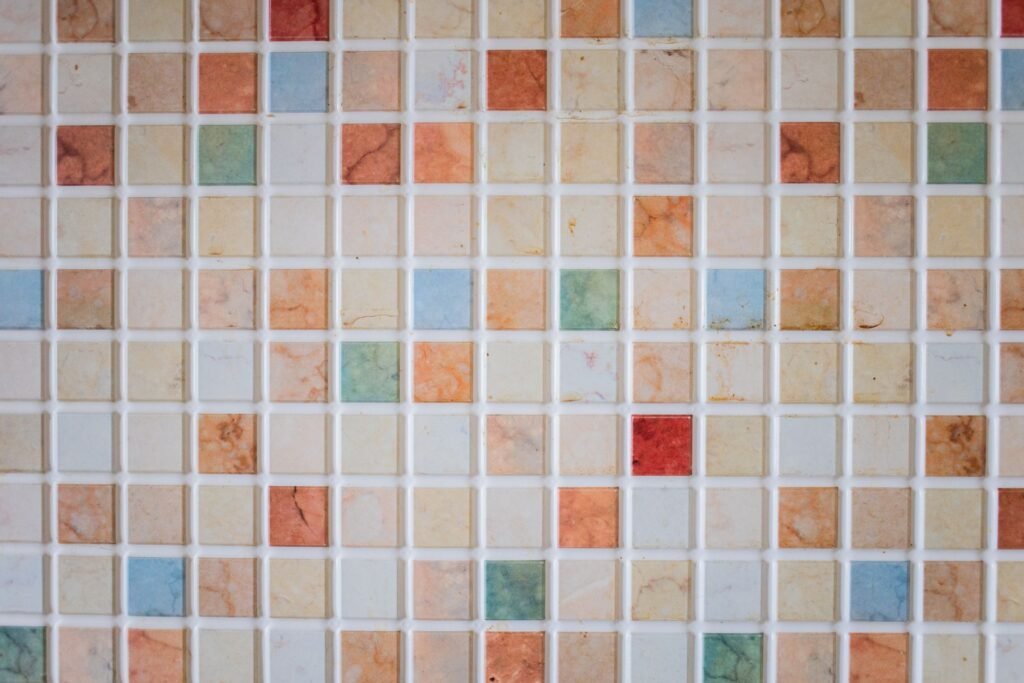
In Ras El Ain Park, the practice Civil Architecture has built a shade structure with a roof of ceramic tiles strung between the trunks of the park’s trees. The trees, which already give shade, become part of the structure that adds more.
The tiles were made in Jordan by Haswa. That choice fits a wider pattern: according to Yanko Design, 80 per cent of Amman Design Week’s work to date has been produced locally. A permanent roof of local tile keeps that work, and the skills behind it, visible in the city.
A court painted with the market
Also in Ras El Ain Park is a basketball court by Abeer Anabtawi. Its surface is bare concrete, decorated with vegetation motifs taken from the produce carts that sell fruit and vegetables in the city: tomatoes, chamomile, mallow leaves and wheat. Mallow, known in Arabic as khubbeiza, is a leafy green cooked in kitchens across the Levant, and chamomile is widely brewed as a tea.
It is an everyday idea of ornament. Instead of a pattern borrowed from a palace or a manuscript, the court takes its decoration from the food people buy on the street, and puts it under the feet of the players who will use it.
A crossing built from stone waste
Outside the Shariah Mosque, L.E.FT and its collaborators have redesigned a street intersection as Ard al Sahn. It is built from local stone waste, and its floor is oriented towards the Qibla, the direction Muslims face in prayer.
That orientation carries the logic of the mosque out into the public road. A space designed for traffic now also acknowledges the building beside it and the people who gather there.
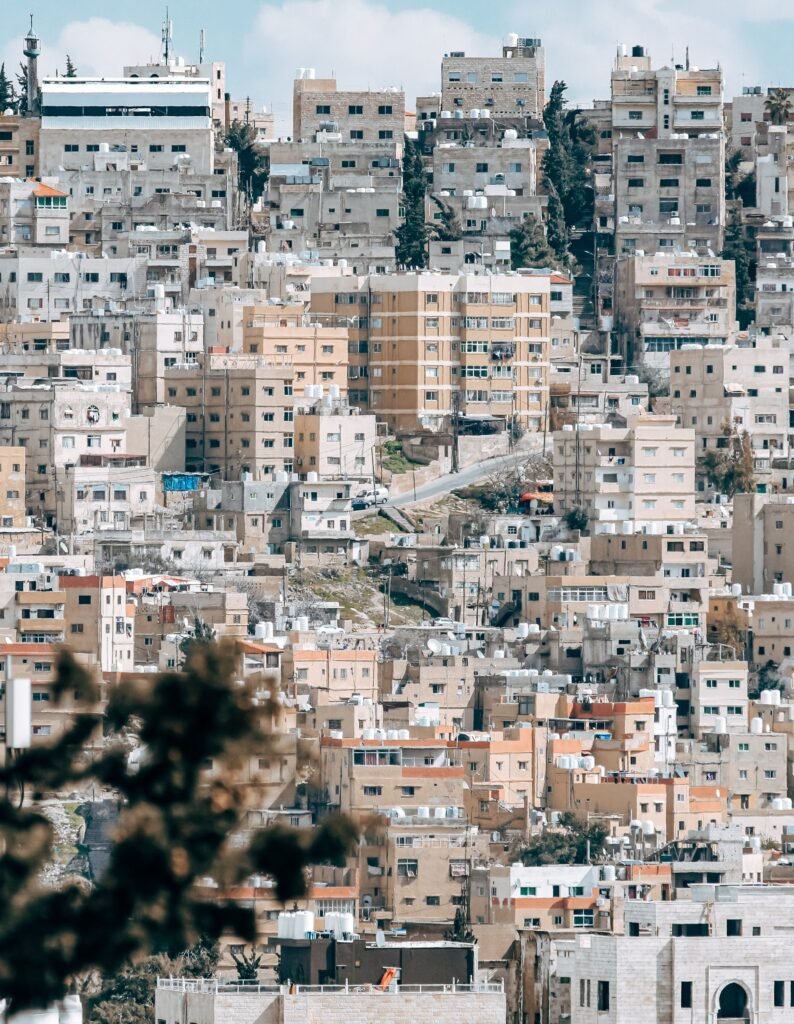
The material matters as much as the layout. Amman is built largely of pale local limestone, and building rules have long required stone on its facades. Stone waste is the offcut and broken material left over from quarrying and cutting. Using it puts the leftovers of that building culture back underfoot, where residents will walk on them every day.
A lamp post with a long memory
The fourth work is a lamp post by Mohamad Nahleh. It is a sculptural fragment in wood and steel, built at half scale and inspired by the history of structural repairs to the Dome of the Rock in Jerusalem. It works as a light pole, standing above a stone seat.
The piece is part monument and part street furniture. It takes a story of care and repair from one of the region’s most celebrated buildings and sets it in the ordinary life of the city, as a place to sit under a light.
Gulf audiences will soon be able to see more of Nahleh’s work. He is listed, with Ozayr Saloojee, among the 32 participants of the third Sharjah Architecture Triennial, which is scheduled to run from 14 November 2026 to 14 April 2027.
What the Gulf can take from Amman
Queen Rania founded Amman Design Week in 2016, and this year’s is its fourth edition. Dezeen describes the 2026 programme as focused on architecture, materiality, textile and product design. The permanent works draw on several of those concerns at once: stone, tile, concrete, wood and steel, made locally and put to public use.
Cities across the Gulf are investing in shaded streets, parks and walkable public space. Amman’s four works offer a modest but useful model: small interventions, made from local materials by regional designers, placed where people already walk, play and pray.
When the festival closes on 17 October, the exhibitions will come down. The roof, the court, the crossing and the lamp will stay, a few more pebbles added to the mountain.
Sources: Amman Design Week, Amman Design Week, Yanko Design, Dezeen, e-flux, Jang