The National Pavilion UAE has chosen the Sharjah-born architect and academic Dalia Hamati to curate the country's exhibition at the 2027 Venice Architecture Biennale. The appointment, announced on 30 September, follows an open call, and Hamati's proposal turns to a subject close to home: how water shaped the settlements of the Emirates, and what that history can teach design in a warming world.
The 20th International Architecture Exhibition of La Biennale di Venezia is scheduled to run from 8 May to 21 November 2027, with a pre-opening on 6 and 7 May. The UAE will show in its permanent pavilion at the Arsenale, in the Sale d'Armi. It will be the country's 16th participation across the biennale's art and architecture exhibitions, and its seventh at the architecture exhibition.
The pavilion's title and design are still being developed. Organisers expect to announce details in January, according to The National.
An architect from Sharjah
Hamati was born in Sharjah in 1984. She studied at the University of Bath and at Columbia University, then practised at Ennead Architects in New York. She is a registered architect in New York State and an assistant professor at the American University of Sharjah's College of Architecture, Art and Design. She has also taught at Columbia and at Pratt Institute, and founded an independent practice in Dubai. Her career has moved between teaching and building, and between New York and the Emirates, a mix that suits a pavilion grounded in research.
Venice is not new ground for her. In 2021 the UAE pavilion, Wetland, by the architects Waiwai, won the Golden Lion for best national participation, the first for the country. Hamati worked with Waiwai and helped coordinate "A Bench in Venice", according to The National.
Water as a subject
Her proposal draws on historical models from the UAE to examine how architecture, climate and water relate to one another, and how design might change the way we understand water in a world that is growing warmer and more urban. The National reports that the pavilion will look at how water has shaped communities, from patterns of settlement to the systems people built to share it.
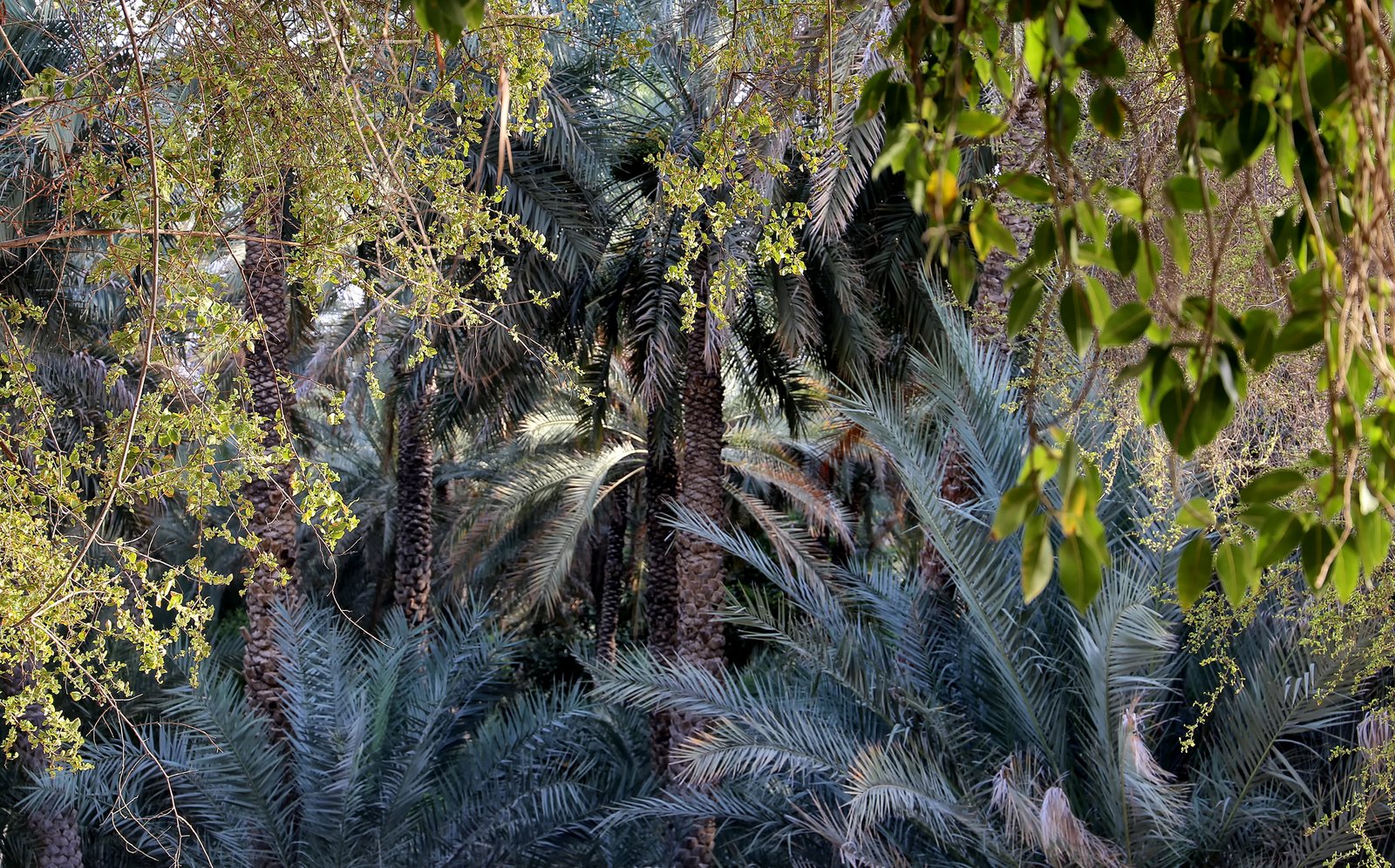
In the Emirates, water has shaped where people settled and how they shared it. The clearest example is the falaj, the ancient system of channels that carries water to the date palm gardens of Al Ain and Oman and divides it among the farms along its course. Whether the falaj will feature in the pavilion has not been announced, but it shows the kind of history the proposal has in view: infrastructure shaped by climate and built from what the land provides.
Hamati put that principle plainly to The National: "We're not importing materials from elsewhere. We have to work with what's around us."
The research will be presented in Venice together with a dedicated publication, developed with researchers and practitioners based in the UAE.
How she was chosen
Hamati was selected through the fourth open call run by the National Pavilion UAE. A committee of experts drawn from universities, museums and government made the choice.
The pavilion is commissioned by the Salama bint Hamdan Al Nahyan Foundation and supported by the UAE Ministry of Culture. Its director, Laila Binbrek, said that Hamati's proposal "stood out for its thoughtful combination of architectural history", in the announcement published by e-flux.
An open call means that the pavilion's theme comes from a proposal rather than an invitation. In this case it comes from an architect who trained abroad, practised in New York and now teaches in the emirate where she was born.
A Gulf record in Venice
The appointment follows a period of real success for the Gulf in Venice. After the UAE's Golden Lion in 2021, Bahrain's national pavilion won the same award at the 2025 Architecture Biennale, the second Gulf win in four years. The architecture exhibition is normally held in odd-numbered years, alternating with the art biennale, so 2027 is the region's next chance to add to that record.
The curators of the 2027 exhibition as a whole are the Chinese architects Wang Shu and Lu Wenyu, whose appointment was reported in January 2026. Wang Shu won the Pritzker Prize in 2012, and the pair are known for buildings that reuse salvaged brick and tile. Their approach sits comfortably beside Hamati's call to work with what is around us.
What comes next
The pavilion's title and design are expected to be announced in January. Between now and the opening in May 2027, Hamati and her collaborators will turn a research proposal into an exhibition and a book.
For the UAE, it is a chance to show in Venice that the region's oldest ways of living with water still have something to say to architects working in a hotter world. A country best known abroad for its newest buildings will be represented by one of its oldest concerns.
Sources: The National, e-flux, ArchitectureAU