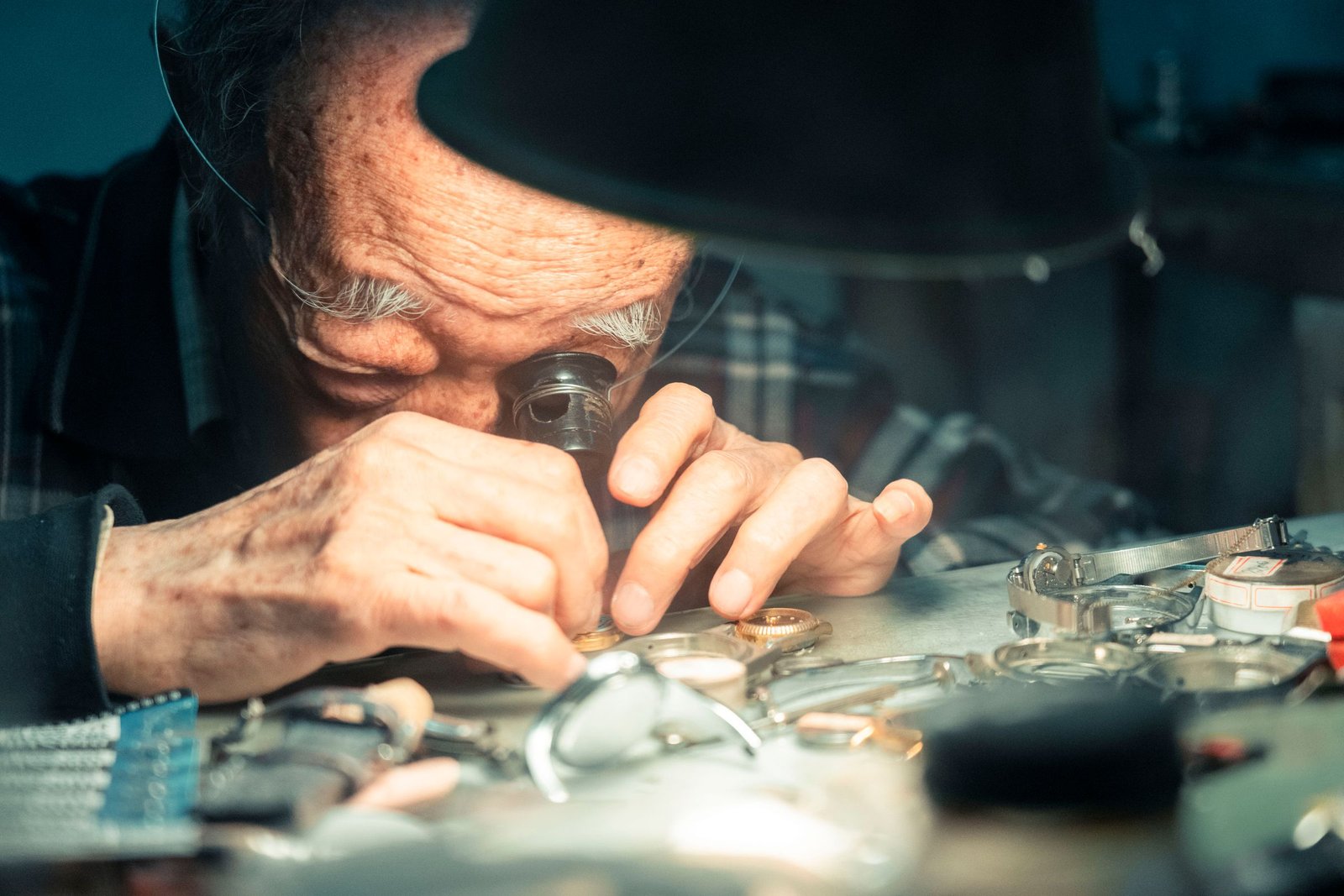
Most fine watches are made by companies. They have design departments, production lines, quality control and sales teams, and the person who assembles a movement rarely meets the person who designed it. This is not a criticism; it is how watches of consistent quality are made in the thousands.
But alongside the great houses there has always been another tradition: the watchmaker who designs, makes and finishes a watch more or less alone. For most of the twentieth century this tradition was nearly extinct. Today it is the most talked-about corner of the watch world, and its watches change hands for sums that would have astonished their makers a generation ago.
What independent means
The word is used loosely, so it is worth being precise. An independent watchmaker is usually someone who owns their own workshop, designs their own movements or substantially reworks them, and makes a very small number of watches each year, often fewer than a hundred and sometimes fewer than ten. Many are members of the Académie Horlogère des Créateurs Indépendants, known as the AHCI, founded in 1985 by the watchmakers Svend Andersen and Vincent Calabrese to give individual makers a collective voice.
What unites them is not a style but an attitude. Their watches are signed by a person rather than a brand. Decisions are made at the bench rather than in a meeting. And the details that a large company might simplify for production, the shape of a bridge, the bevel on a screw, the way light falls across a dial, are treated as the whole point.
Daniels and the escapement
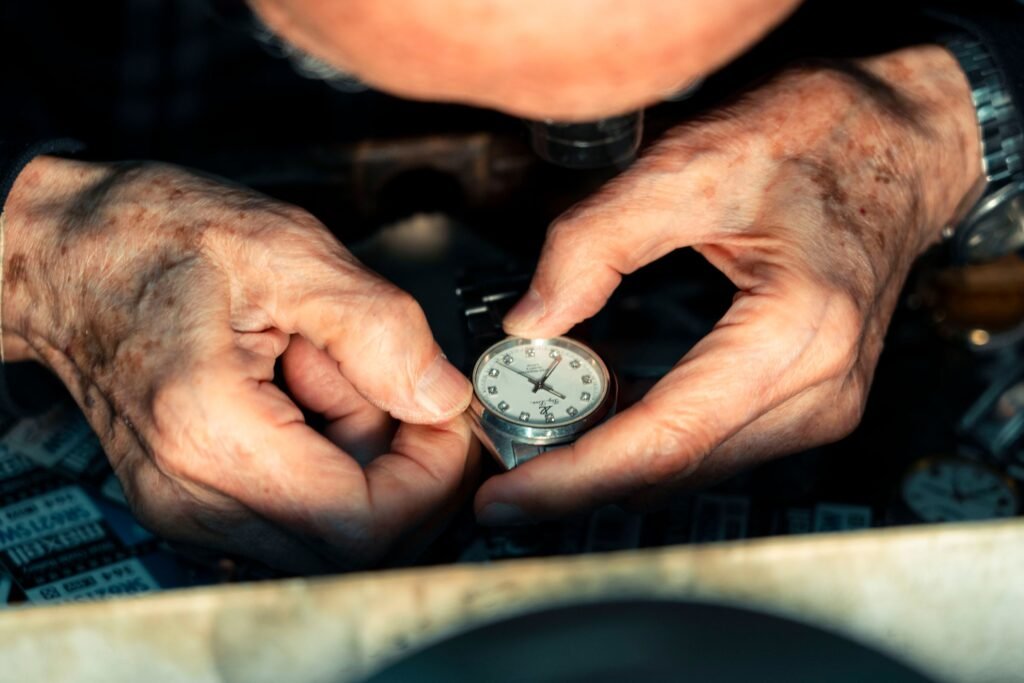
Any story of modern independent watchmaking begins with George Daniels. Born in London in 1926, he grew up poor, served in the army and taught himself watchmaking by repairing watches. He became one of the great authorities on Abraham-Louis Breguet, and then set himself a task that almost nobody attempted: to make a complete watch, every part of it, by hand.
He made a few dozen watches in his lifetime, using what became known as the Daniels method, and each one is now a museum piece. But his lasting contribution was an invention. In the 1970s he developed the co-axial escapement, a new way of releasing the energy of the mainspring that greatly reduced sliding friction and therefore the need for lubrication. He patented it in 1980 and spent years trying to persuade the industry to adopt it. Omega finally did, launching its first co-axial watches in 1999. Today millions of watches carry a descendant of an idea worked out at a single bench on the Isle of Man.
Daniels took one apprentice, Roger Smith, who continues to make watches by hand on the island. The line from Breguet to Daniels to Smith is one of the clearest examples of how this kind of knowledge passes: not through schools, but from one person to another.
The valley of Philippe Dufour
If Daniels was the theorist, Philippe Dufour is the craftsman. Born in 1948 in the Vallée de Joux, the high, cold valley in the Swiss Jura where watchmaking was once a winter occupation for farming families, he trained locally and worked for the great houses before setting up on his own.
In 1992 he presented the first grande sonnerie in a wristwatch, a striking mechanism that chimes the hours and quarters automatically, one of the most complicated things a watch can do. Then he went in the opposite direction. His Simplicity, introduced in 2000, is a plain time-only watch with small seconds. Around two hundred were made over roughly a decade, each finished by hand to a standard that other makers still use as a reference.
Dufour's influence is less about any single watch than about the idea that simplicity, executed perfectly, can be as impressive as complication. A plain dial, a beautifully finished movement visible through the back, and nothing else: that has become the language of a whole generation of independents.
Journe and the signature
François-Paul Journe was born in Marseille in 1957, trained in Paris and moved to Geneva, where he founded his own company in 1999. His first watch under his own name, the Tourbillon Souverain, combined a tourbillon with a remontoir, a small device that delivers energy to the escapement in constant, measured portions. His Chronomètre à Résonance of 2000 used two separate movements whose balances influence each other through resonance, an effect described by watchmakers in the eighteenth century and almost never put into a wristwatch.
Journe's dials carry the words Invenit et Fecit, Latin for "invented and made". It is a fair description. He is unusual among independents in having grown to a substantial company with his own boutiques, while keeping a recognisable personal style: brass movements in his earlier years, then rose gold; off-centre dials; a distinctly French elegance in a Swiss setting.
He showed that an independent could become an institution without losing the character that made the work interesting in the first place.
A new generation
For a long time the independents were a small circle of older men in quiet workshops. That has changed. A new generation trained in the great houses and then left to make their own work, and collectors have followed them.
Rexhep Rexhepi is the best-known example. Born in Kosovo in 1987, he moved to Geneva as a boy, trained at the bench of several major makers and founded his own workshop, Akrivia, in 2012. His Chronomètre Contemporain, first shown in 2018, is a time-only watch with a level of finishing that drew immediate comparisons with Dufour, and demand for it far exceeds the small number produced each year.
There are many others: the Finnish watchmaker Kari Voutilainen, whose workshop in the Swiss village of Môtiers is known for its dials and finishing; makers in Germany, Japan and the Netherlands; and young watchmakers who have built followings online before they have built a hundred watches. What they share is a willingness to spend weeks on a part that a factory would make in minutes.
Buying from an independent
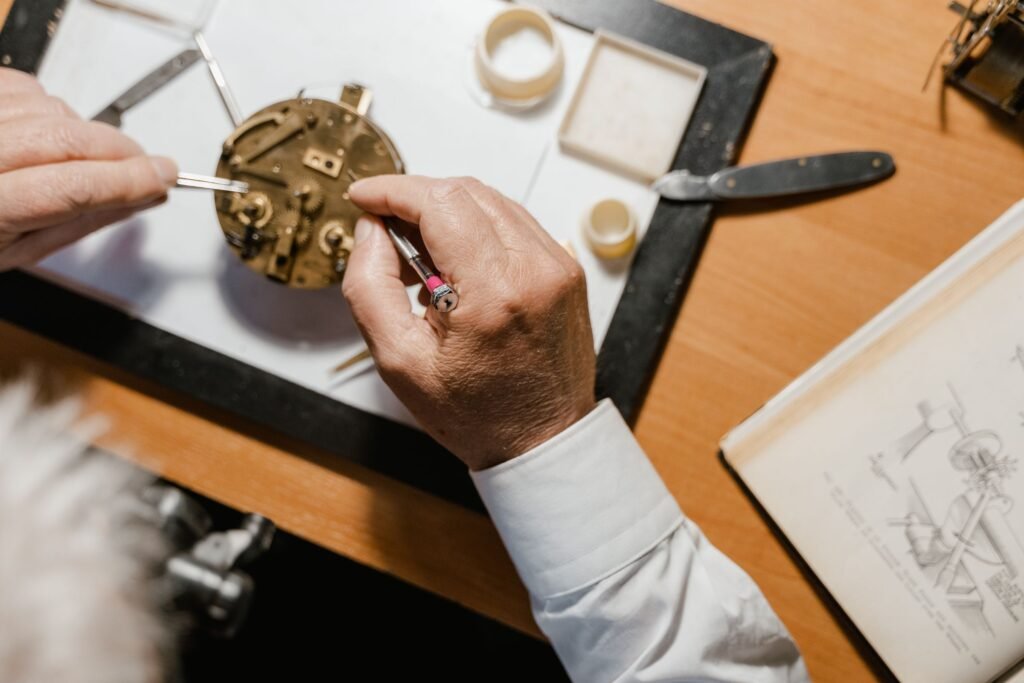
For collectors, the appeal of an independent watch is partly the object and partly the relationship. Buying from a large brand means walking into a boutique. Buying from an independent often means writing to the maker, waiting, and sometimes meeting them.
Waiting lists can run for years, and some makers choose their buyers, preferring people who will wear and keep the watch rather than resell it quickly. This can feel exclusive, and sometimes it is. But it also reflects a practical reality: a workshop that produces thirty watches a year cannot meet the demand of thousands of interested buyers, and the maker would rather the watches go to people who care about them.
For those who cannot wait or cannot afford the most famous names, there is good news. The renewed interest in independent watchmaking has encouraged many smaller makers, and some produce beautifully finished watches at prices well below the headline names. The way in is the same as it has always been: learn what good finishing looks like, visit the fairs, and talk to the makers themselves.
The Gulf and the independents
Collectors in the Gulf have become some of independent watchmaking's most important supporters. The region's long tradition of commissioning things made by hand, from tailored bishts to custom jewellery and perfume blended for one person, translates naturally into an appreciation of watches made by a single maker.
Dubai Watch Week, first held in 2015 and led by the Seddiqi family, the Dubai watch retailers, has made a point of bringing independent makers to the region to meet collectors face to face, alongside the large houses. For many independents, these conversations matter as much as any sale. They allow makers to explain choices that are invisible in a photograph, and they allow collectors to see the hands behind the work.
The result is a quiet exchange of ideas. Some independent makers have created watches with Arabic numerals, calligraphy or regional motifs, and some of the most important independent pieces of recent years have found homes in Gulf collections. As the region's own watch culture deepens, it is not hard to imagine the next great independent coming from here.
Why it matters
It would be easy to see the independents as a niche, a small luxury within a luxury. But they matter to watchmaking as a whole. Many of the ideas now common in the industry were first tried at a single bench, and many of the people who now design movements for the great houses learned their standards by looking at the work of these makers.
They also preserve something that machines cannot: the judgement of a single person about when a thing is finished. An independent watch is not rare because it is marketed as rare. It is rare because one person can only make so many. In a world that produces almost everything in quantity, that limit is the luxury.