Long before clocks, the moon was the calendar everyone could read. Its shape changes from night to night in a cycle that anyone can follow without instruments: the thin crescent after sunset, the half moon, the full moon rising at dusk, and the slow return to darkness. Farmers, fishermen, travellers and religious communities organised their lives around it for thousands of years.
Watchmakers have been putting the moon on dials for centuries, first on clocks and pocket watches, then on wristwatches. Today the moon phase is one of the most popular complications in fine watchmaking, and one of the least necessary. Almost nobody needs a watch to tell them what the moon is doing. They wear one because it is beautiful, and because it connects a modern object to the oldest way of keeping time.
How it works
The moon takes about 29 days, 12 hours and 44 minutes to go from one new moon to the next. Astronomers call this the synodic month. A watch that shows the moon's phase has to follow that cycle with a few simple parts.
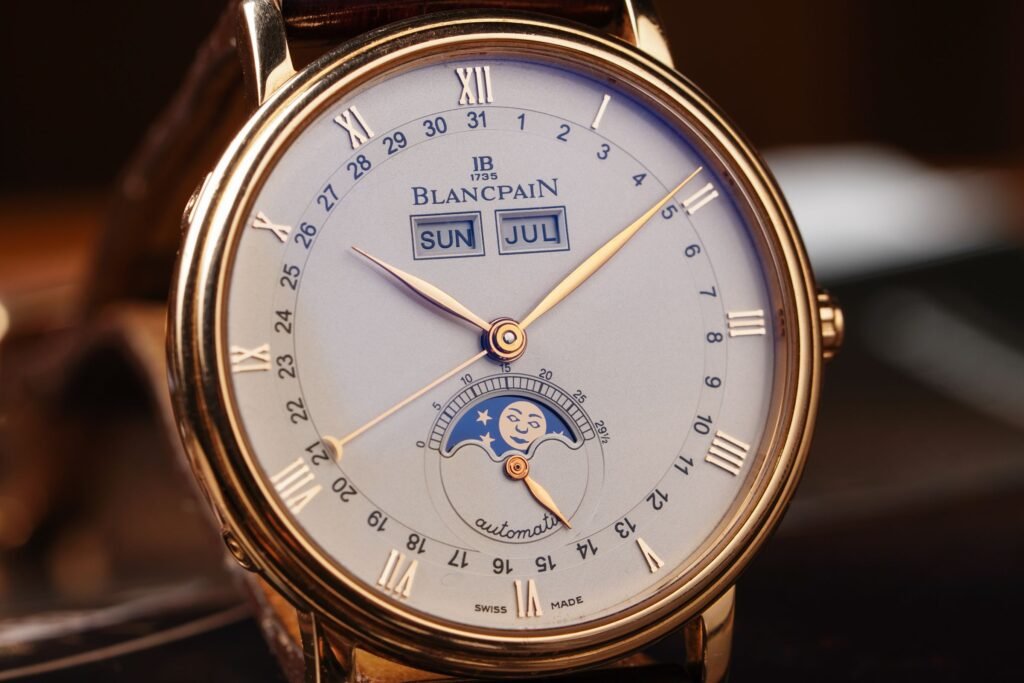
The most common solution is a disc painted with two identical moons, usually in gold against a dark blue sky scattered with stars. The disc sits behind an opening in the dial shaped like two overlapping humps, which hide part of each moon as it passes. Once a day, the movement pushes the disc forward by one tooth. The disc has fifty-nine teeth, enough for two lunar months of twenty-nine and a half days each, so as one painted moon disappears the other begins to appear.
How accurate it is
Because fifty-nine teeth over two months assumes a month of exactly twenty-nine and a half days, the simple mechanism drifts slightly. The real lunar month is about forty-four minutes longer. The error adds up to roughly one day every two years and seven months, at which point the owner moves the moon forward by one step with a small pusher or the crown.
More ambitious watchmakers use larger wheels with more teeth and finer gearing. Some of these "astronomical" moon phases are accurate to a single day over more than a hundred years, and a few to far longer. It is a lovely example of watchmaking's habit of pursuing precision well beyond any practical need.
The crescent and the calendar
In most of the world the moon phase is a decoration. In the Arab world, and across the wider Muslim world, it touches something real.
The Hijri calendar is lunar. Its twelve months have twenty-nine or thirty days, and its year is about eleven days shorter than the solar year, which is why Ramadan moves earlier through the seasons, arriving in summer in some decades and winter in others. Traditionally, a new month begins when the thin crescent, the hilal, is seen in the western sky after sunset. Families still gather to hear whether the crescent of Ramadan or Shawwal has been sighted, and the announcement that the month has begun is one of the most anticipated moments of the year.
Saudi Arabia also uses a calculated calendar, the Umm al-Qura calendar, for civil and administrative purposes, and many countries now combine astronomical calculation with sighting. But the image of the crescent remains at the centre of the year's rhythm.
What a watch can and cannot tell you
It is worth being clear: a moon phase watch is not a Hijri calendar. It shows the shape of the moon, not the date of the Islamic month, and because the beginning of each month depends on when the crescent is sighted in a particular place, no simple mechanism can predict it perfectly. Building a true Hijri calendar into a mechanical watch is extremely difficult for exactly this reason, which is why such watches are so rare.
What a moon phase can do is keep you aware of the cycle. On a clear night in the desert, it is a pleasure to look at the dial and then up at the sky and see the same shape in both. During Ramadan, it quietly counts down towards the new crescent. It turns an abstract complication into something you live with.
Choosing one
Moon phases appear on all kinds of watches, from simple dress watches to perpetual calendars. If you want one to wear daily, look for a clear, legible design where the moon adds charm without crowding the dial. A complete calendar, showing day, date, month and moon, is a classic combination and surprisingly practical.
Check how the moon is corrected. Most have a recessed pusher in the side of the case, operated with a small stylus, or a position of the crown. You will need to set the moon when you first wear the watch, using a published moon calendar, and then correct it occasionally if the watch stops.
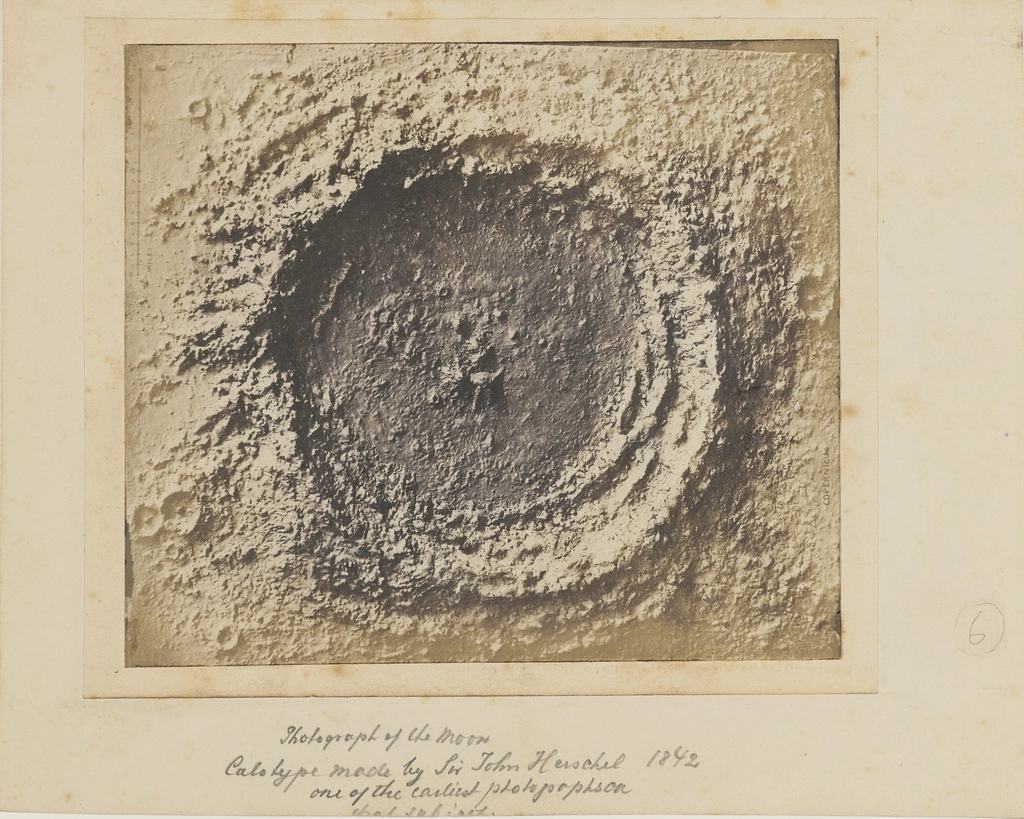
And look at the moon itself. Some are painted, some engraved in gold, some made of meteorite or mother-of-pearl, and a few show the moon realistically, with craters and shading. It is a small part of the dial, but it is often the part people fall in love with.