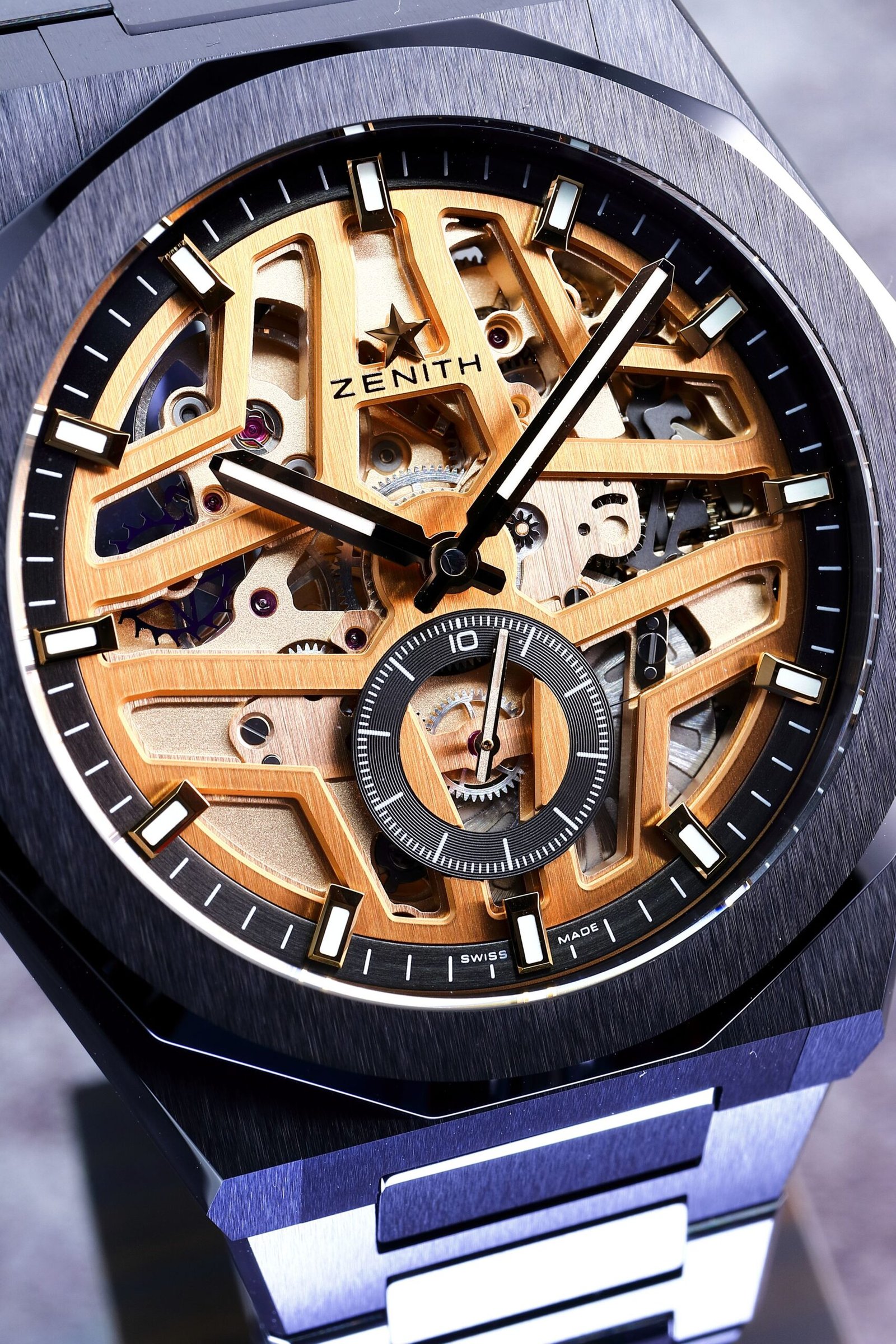
Look through the small window on the dial of a tourbillon watch and you will see a tiny cage of steel or titanium turning slowly, usually once a minute. Inside it, the balance wheel beats back and forth. The whole assembly, sometimes weighing less than a third of a gram, seems to float. It is hypnotic, and it is the reason many people fall for mechanical watches in the first place.
It is also, in a wristwatch, one of the most debated inventions in watchmaking.
A problem with gravity
At the end of the eighteenth century, the best watches in the world were pocket watches, and most of them spent their days in the same position: upright in a waistcoat pocket, crown pointing up. This was a problem for accuracy.
The heart of a watch is the balance wheel and its hairspring, which oscillate at a steady rate and divide time into equal parts. In theory, the balance is perfectly symmetrical. In practice, no balance is perfect. Its centre of gravity is always very slightly off, and when a watch sits in one position for hours, gravity pulls on that imperfection in the same direction, making the watch run consistently a little fast or slow.
Abraham-Louis Breguet, the Swiss-born watchmaker working in Paris, had an ingenious answer. If the error came from the balance staying in one position relative to gravity, why not keep it moving? He mounted the balance, hairspring and escapement in a small rotating cage. As the cage turned, the errors in each position were spread across the full circle and largely cancelled each other out.
He patented the idea in Paris in 1801 and called it the tourbillon, a word meaning whirlwind.
A rare thing for a long time
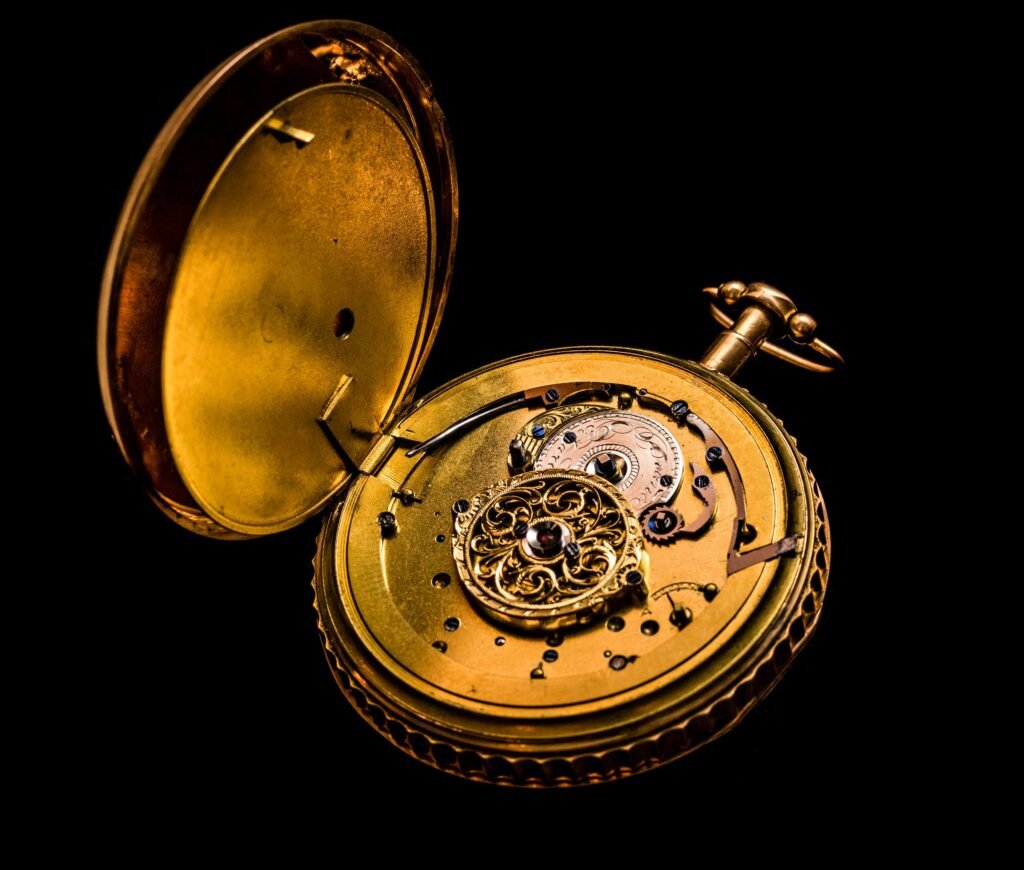
Breguet made only a few dozen tourbillon watches in his lifetime. They were extremely difficult to make, and for most of the next two centuries the tourbillon remained a specialist device, used mainly in high-precision pocket watches and in the chronometry competitions held by astronomical observatories, where watches were tested for accuracy over weeks.
Some notable steps followed. In 1920 Alfred Helwig, a teacher at the watchmaking school in Glashütte in Germany, created the flying tourbillon, supported from below only, without a bridge across the top, so that the cage could be seen clearly. In 1947 Omega made a small series of tourbillon wristwatches for observatory trials. And in 1986 Audemars Piguet introduced an automatic tourbillon wristwatch in series production, at the time remarkably thin, which helped turn the tourbillon from a museum curiosity into a modern showpiece.
Does it work on the wrist?
This is the honest question. A wristwatch does not sit in one position for hours. It moves constantly with the arm, and when it is taken off at night it usually lies flat on a table, where gravity affects a balance far less. The problem the tourbillon was designed to solve barely exists on the wrist.
Some watchmakers argue that a well-made tourbillon still averages out errors in the vertical positions a watch passes through during the day. Others point out that modern materials, such as silicon hairsprings, and careful adjustment can achieve the same accuracy at a fraction of the cost and complexity. Both are partly right. What is not in doubt is that a tourbillon is extremely hard to make well, and that a poorly made one can be less accurate than a good ordinary watch.
Why it endures
If the tourbillon's practical value on the wrist is modest, why does it remain the most celebrated complication in fine watchmaking? Because it is visible proof of skill.
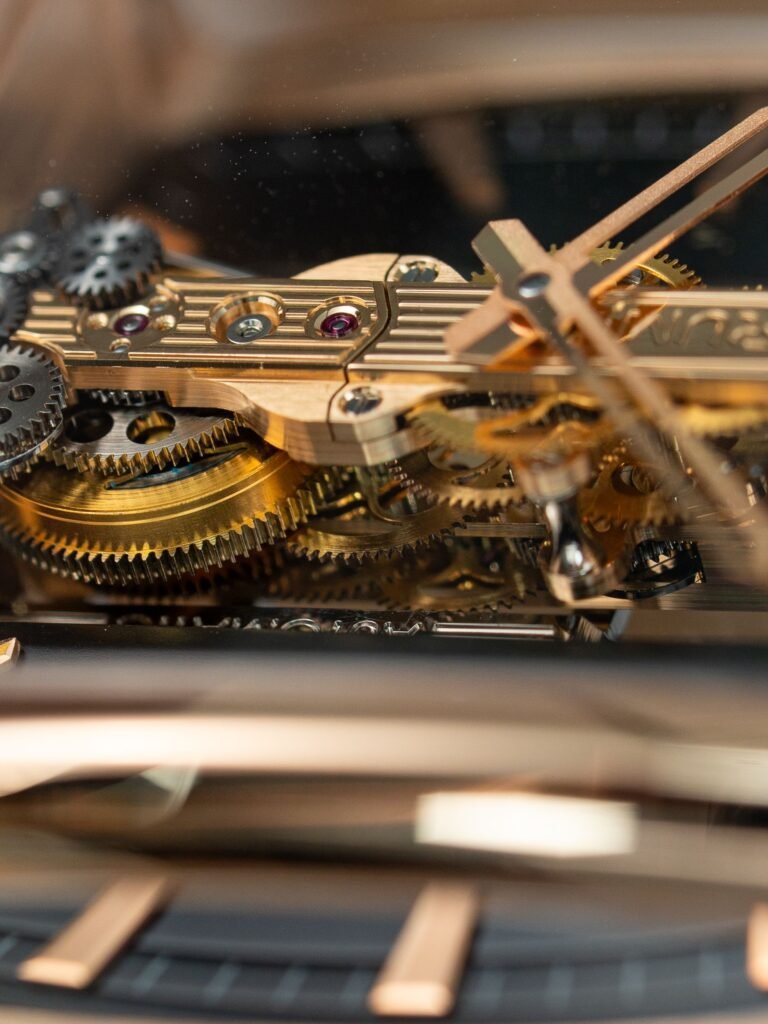
A tourbillon cage contains dozens of tiny parts that must be made, finished and assembled to extraordinary tolerances, then balanced so precisely that the turning cage does not itself introduce errors. Every part must be as light as possible, because the movement has to carry the cage's weight with every beat. Watching one, you are watching the hardest kind of watchmaking happening in front of you.
Modern makers have pushed the idea in every direction: double tourbillons with two cages, cages that turn on two or three axes at once, such as Jaeger-LeCoultre's Gyrotourbillon of 2004, and tourbillons that turn faster or slower than the classic once a minute. There is also the related carrousel, invented by Bahne Bonniksen in 1892, which achieves a similar effect by a different gearing.
A word for buyers
Tourbillons were once found only in the most expensive watches. Today they are made at many price levels, some by industrial methods. That is not necessarily a bad thing, but it means the word alone guarantees little. What matters is the finishing of the cage, the quality of the movement around it, and the reputation of the maker for servicing it properly.
A tourbillon is an answer to a question that wristwatches rarely ask. That has never made it less beautiful to watch. Two centuries after Breguet, it remains watchmaking's most eloquent argument for doing things the hard way, simply because they can be done.