Saudi practice Studio Ahmed Aldossary has completed Ashjar, a café in Riyadh that its architects describe as "a small urban escape within Riyadh, shaped by gardens, water, and shade". Led by the architect Ahmed Aldossary and finished in 2025, the project was published by the architecture website ArchDaily on 28 September. According to ArchDaily, the café covers 785 square metres, and the material listed for it is stone.
The name sets the tone. Ashjar is Arabic for "trees", and the project brings architecture, landscape and interiors together. ArchDaily credits the landscape architecture to Alnaimi Landscape Architecture and the interior design to the Ashjar Team, with photographs of the finished café by Aylul Studio.
In size, Ashjar is a modest building. In purpose, it touches on a larger story in the Kingdom: the place of the café in everyday social life, and the question of how to make a comfortable place to sit in a city of long, hot summers.
A third place for Riyadh
In the project text published by ArchDaily, the architects set Ashjar within the rise of cafés as social spaces, noting that "cafés have become an important third place for many Saudis". The term was popularised by the American sociologist Ray Oldenburg, who used it for the places where people gather that are neither home, the first place, nor work, the second.
In Saudi Arabia the idea has deep roots. The majlis, the room where guests are received, has long been a setting for conversation over coffee. The modern café carries some of that role into the street, as a place to meet, talk and spend time away from both home and office. When the architects speak of a third place, they are describing a social habit as much as a type of building.
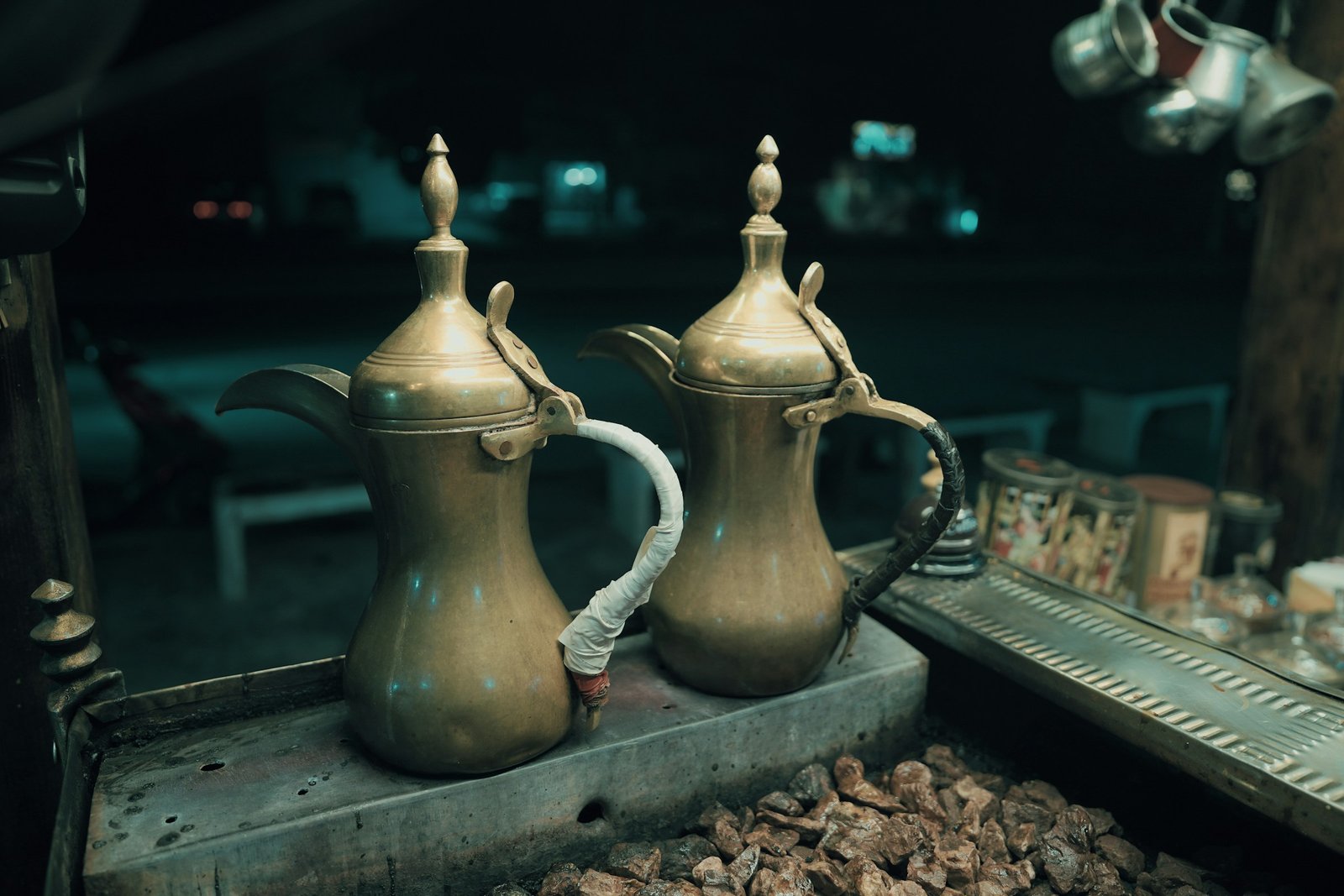
Coffee carries particular weight here. Saudi Arabia’s Ministry of Culture named 2022 the Year of Saudi Coffee. Arabic coffee and the customs that surround it were inscribed on UNESCO’s list of the Intangible Cultural Heritage of Humanity in 2015, in a joint nomination by Saudi Arabia, the United Arab Emirates, Oman and Qatar. A café designed with care therefore belongs to a long tradition of hospitality as much as to the city’s newer social life.
Gardens, water and shade
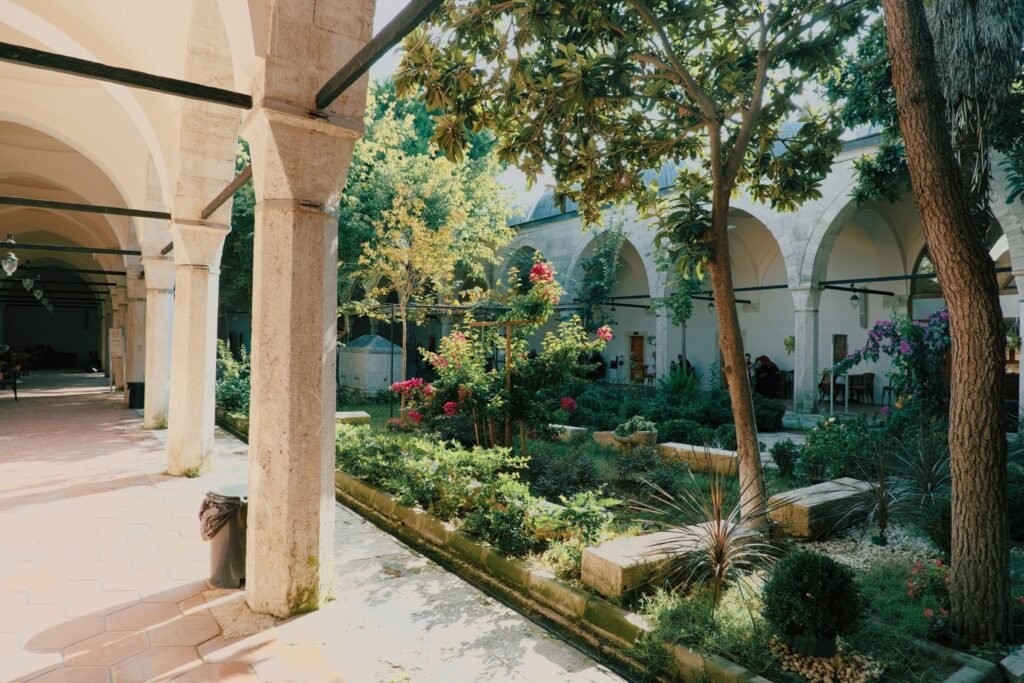
The three elements the architects name are among the oldest tools for making a hot place comfortable. Riyadh stands on the Najd plateau in the centre of the Arabian Peninsula, where summer temperatures regularly rise above 40°C. Shade keeps the sun off walls, floors and people. Trees and planting add more shade and cool the air around them. Water, seen and heard, has long been used to make an outdoor space feel calmer and cooler.
The courtyard gardens of the Islamic world, with their water channels and shaded walks, were built on the same principles. The material published by ArchDaily does not tie Ashjar to any one historical model. But by naming gardens, water and shade as the forces that shaped the café, its architects draw on ideas that people in this region have used for centuries.
The credits point the same way. Giving the landscape its own designer, Alnaimi Landscape Architecture, suggests that the gardens were treated as part of the project rather than an afterthought, in keeping with a name that means trees.
Built in stone
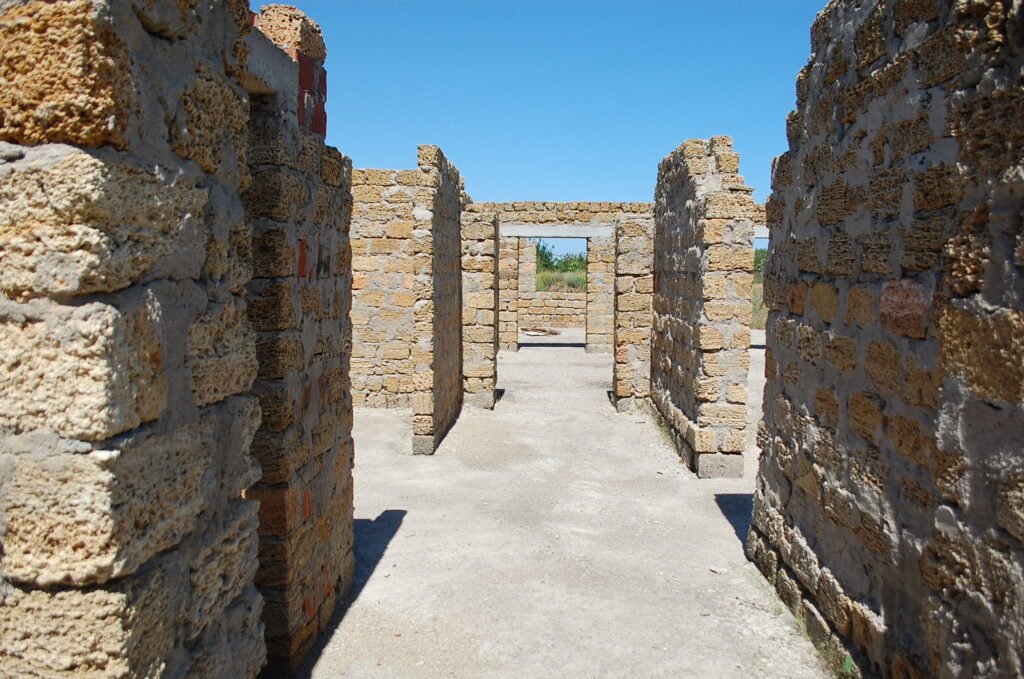
Stone is the one material listed for the project, and it suits the climate. Stone has a high thermal mass: it absorbs heat slowly and releases it slowly, which helps a building stay steadier through the hottest hours of the day. It also stands up well to strong sun and dust, and its surface changes character as the light moves from morning to evening.
There is a regional logic to the choice too. Across the Arabian Peninsula, builders worked for generations with the materials closest to hand, from mud brick in Najd to coral stone along the Red Sea coast. A stone café in Riyadh continues that habit of building with solid, natural material that ages well in a hard climate.
A café at the scale of an afternoon
Much of the attention paid to Riyadh’s architecture goes to its largest projects. A café of 785 square metres works at another scale: the scale of a conversation, a meeting with friends and a cup of coffee. It is at this scale that most people meet a city’s architecture every day.
Ashjar is also the work of a Saudi studio building in its own capital. Its publication on ArchDaily, one of the most widely read architecture websites, carries that work, and the architects’ idea of a garden café shaped by climate, to an international audience.
For the Kingdom’s café culture, the project makes a simple case: that a place to drink coffee can also be a considered piece of architecture, with its gardens, its water and its shade planned together. In a city of long, hot summers, shade is the first thing a good café has to offer, and Ashjar’s architects name it as one of the forces that shaped their design.
Sources: ArchDaily