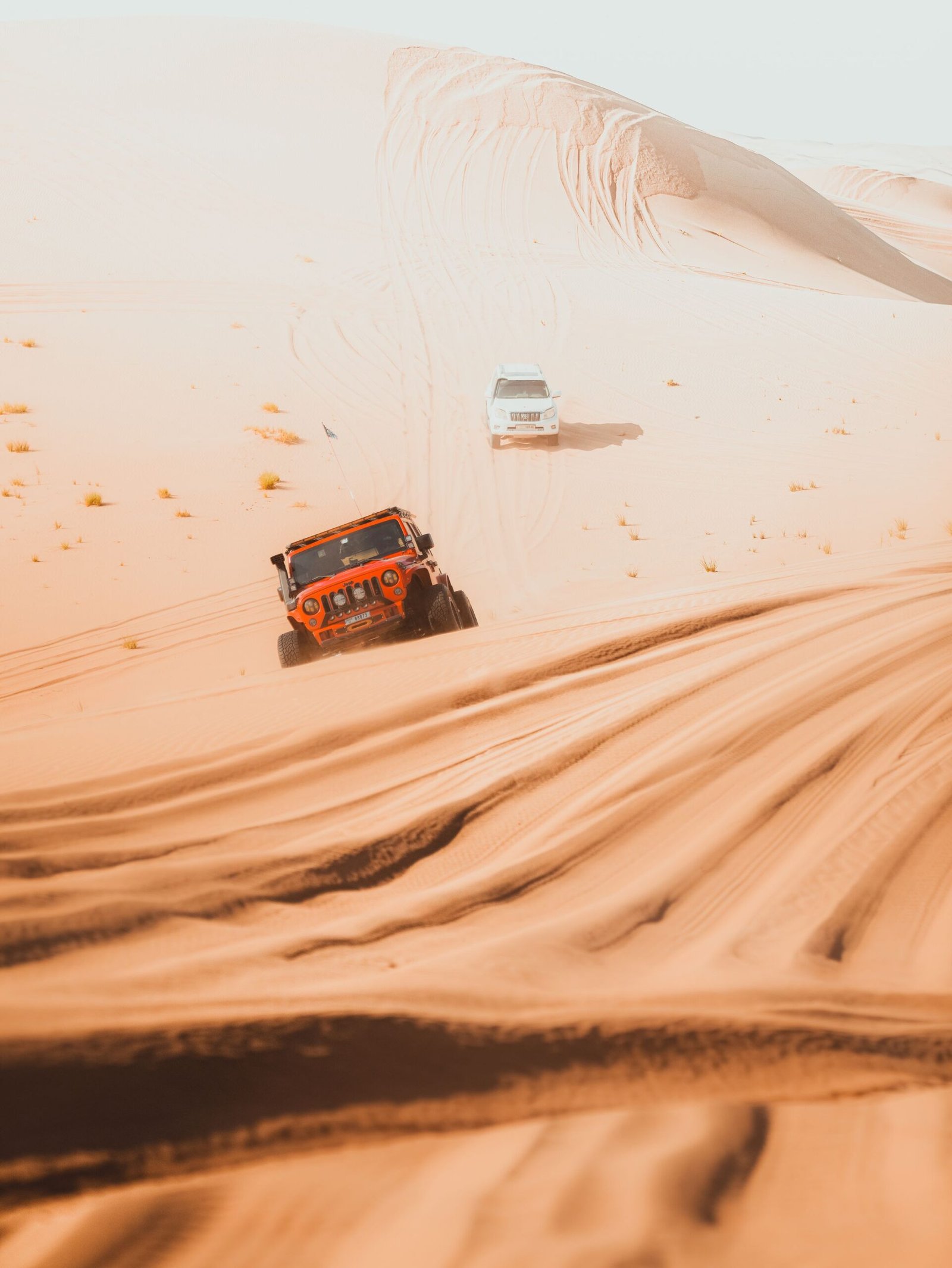
Stand on a dune at the edge of the Empty Quarter on a winter afternoon and it is easy to feel how vast it is. The Rub' al Khali covers roughly 650,000 square kilometres across Saudi Arabia, Oman, the Emirates and Yemen, the largest continuous body of sand on Earth. For most of human history, crossing it was a feat of endurance measured in weeks, and only those who knew its wells and its weather could do it safely.
Then, within the span of a single lifetime, it became something that could be done in a day. The machine that made the difference was the four-wheel-drive vehicle, and its arrival changed not only how people travelled but how they thought about the desert itself.
Before the engine
Until the middle of the twentieth century, the desert belonged to the camel. Bedouin families moved with their herds between seasonal grazing and wells, and caravans carried goods along routes that had been used for centuries. The knowledge needed to survive was immense: the location of water, the reading of tracks and winds, the right season for each journey.
The British explorer Wilfred Thesiger crossed the Empty Quarter twice between 1946 and 1948, travelling with Bedouin companions by camel. His book Arabian Sands, published in 1959, is still one of the great accounts of the desert. It is also, as he knew even then, an elegy. By the time it appeared, the world he described was already changing.
The first machines
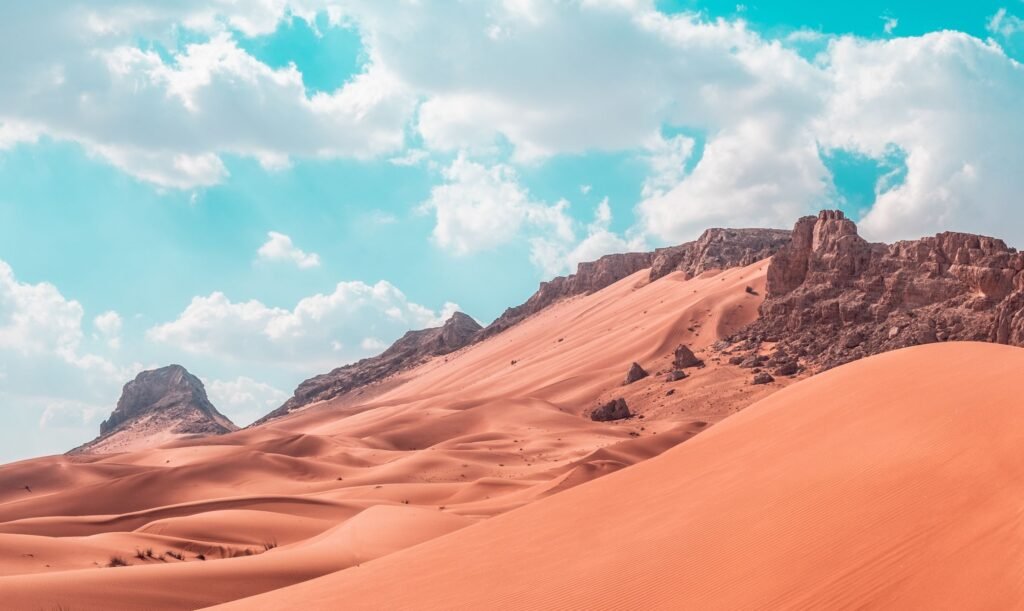
The change came with oil. From the 1930s onwards, exploration parties needed to cross ground that no vehicle had crossed before, and the early machines were adapted military trucks and cars, often struggling in soft sand.
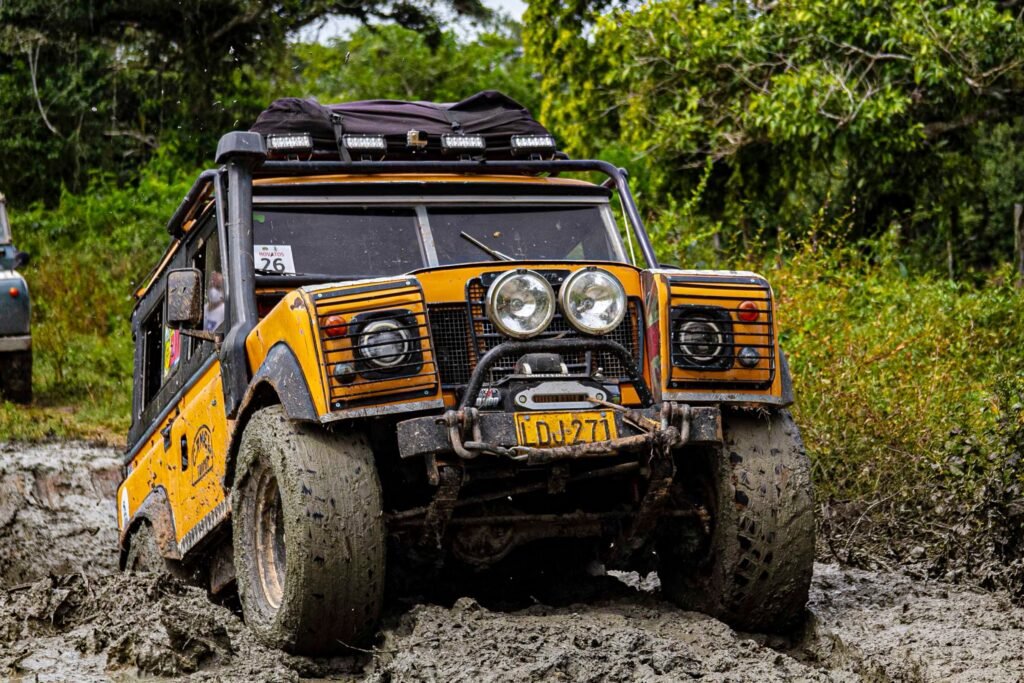
In 1948, the British Rover company showed a simple, rugged vehicle at the Amsterdam motor show: the Land Rover. Built with an aluminium body over a steel chassis, with four-wheel drive and a short wheelbase, it was designed for farmers but proved itself in every hard environment it met. In the 1950s and 1960s, Land Rovers became a common sight across the Gulf, carrying survey teams, officials and supplies, and teaching a generation that the desert could be driven.
These were tough, uncomfortable vehicles. They overheated, they bogged down, and they needed constant repair. But they could go where nothing with wheels had gone before.
The Japanese arrive
The vehicles that came to define the region's relationship with the desert arrived from Japan. Toyota had built its first four-wheel-drive vehicle, the BJ, in 1951, and named it the Land Cruiser in 1954. Nissan's Patrol appeared the same year as the BJ. Both were conceived as tough utility vehicles, and both were steadily improved for export markets where reliability mattered more than anything else.
The Land Cruiser's 40 Series, built from 1960 until the mid-1980s, earned a reputation across the Middle East for being almost impossible to break. Later generations added comfort without losing toughness. The Patrol followed a similar path, and over the decades the rivalry between the two became something close to a regional institution, debated in majlis and car parks with the passion others reserve for football.
What these vehicles offered was not only capability but dependability. In a place where a breakdown far from a road could be dangerous, a vehicle that started every time and could be repaired with simple tools was worth more than any amount of luxury.
A culture of sand
As cities grew and roads spread, the four-wheel drive found a new role. It was no longer only a working vehicle; it became a way of returning to the desert for pleasure.
Weekend trips into the dunes, with families and friends, became one of the region's great pastimes. Drivers learned to read the sand, to lower tyre pressures, to climb dunes in convoys and to recover vehicles that had sunk to their axles. Winter camping, with fires, coffee and long evenings under the stars, kept alive a connection to the desert that city life might otherwise have broken.
At the edge of the Empty Quarter near Liwa, the dune known as Tal Moreeb, around 300 metres high, became the site of hill-climb competitions in which drivers try to reach the top of its steep face. The sight of modified vehicles roaring up the sand, watched by crowds camped across the surrounding dunes, is one of the most distinctive scenes in Gulf motoring.
Luxury in the dunes
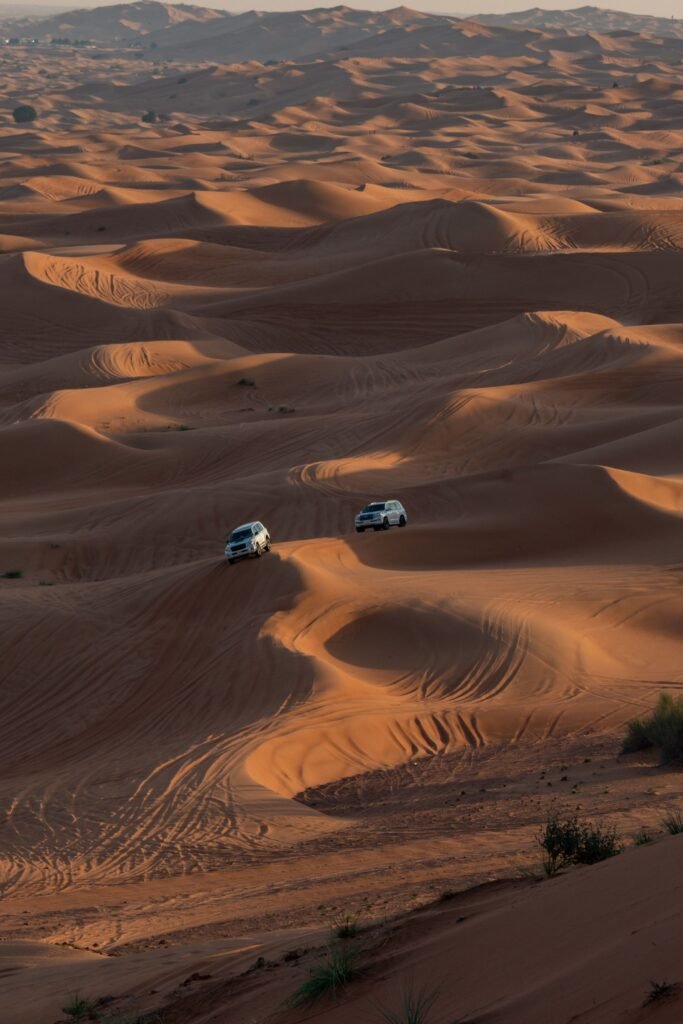
Over time, the four-wheel drive moved up in the world. The Range Rover of 1970 showed that a capable off-roader could also be comfortable and elegant, and the Mercedes-Benz G-Class, introduced at the end of the 1970s, followed a similar path from military origins to luxury. The Land Cruiser and Patrol themselves grew more refined with each generation, adding leather, air conditioning that could cope with summer and the kind of quiet that makes a long highway drive effortless.
In the Gulf, a large four-wheel drive became the natural family car: high enough to see over traffic, strong enough for the desert at the weekend, and spacious enough for a large family and its luggage. That combination explains why the region became one of the world's most important markets for these vehicles, and why manufacturers began testing and designing with Gulf conditions in mind.
Respecting the desert
The freedom the four-wheel drive brought also carries responsibility. The desert remains dangerous for the unprepared: heat, soft sand, getting lost and running out of water are real risks. Experienced drivers never travel alone, carry recovery equipment, water and fuel, and tell someone where they are going.
There is an environmental side too. Desert ecosystems are fragile, and the plants and animals that live in them recover slowly from damage. Many authorities now designate areas for off-road driving and protect others entirely, and responsible drivers stay on established routes, take their rubbish home and leave the desert as they found it.
The desert ahead
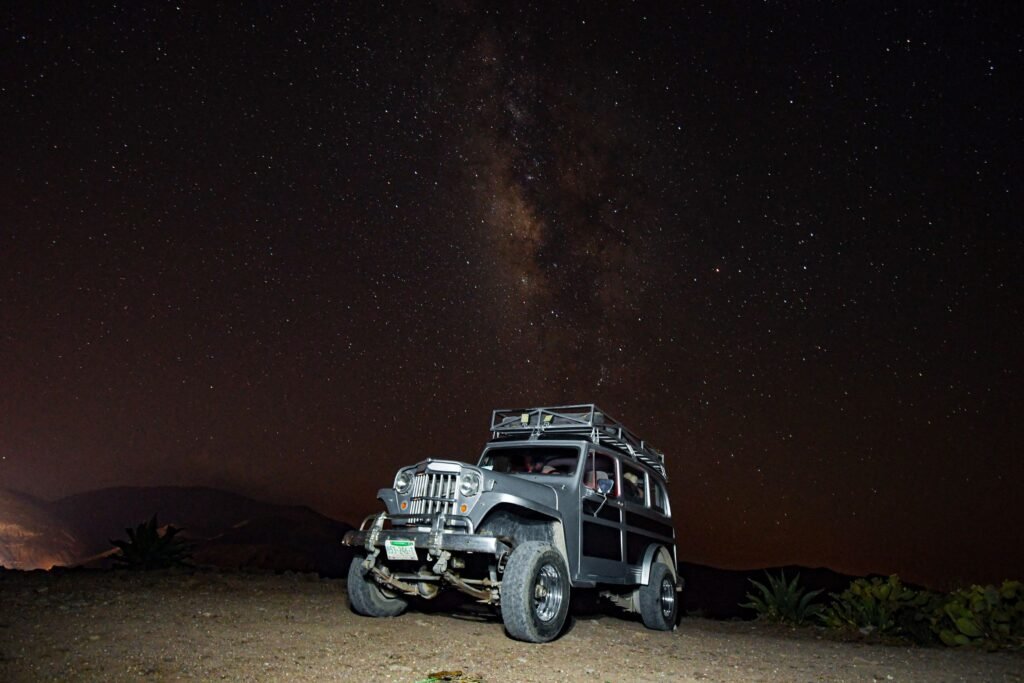
Today, the vehicles parked outside a desert camp might include a classic Land Cruiser, a modern Patrol, a Range Rover and, increasingly, a hybrid or electric four-wheel drive. The machines will keep changing. What has not changed is the pull of the sand itself.
In one lifetime, a journey of weeks became an afternoon. Few machines have changed a landscape's meaning so completely. Yet on a winter evening, with the engine off and the fire lit, the desert feels much as it must have felt to the travellers who crossed it on foot and camel. The four-wheel drive made the desert reachable. It did not make it small.