Jeddah Tower has climbed past the midpoint of the world's tallest building. On 9 August, The National reported that the Saudi skyscraper now stands at 107 floors and more than 430 metres, higher than half the height of Dubai's 828-metre Burj Khalifa. Construction is on track for completion in 2028, according to the newspaper, and the finished tower is expected to become the first building anywhere to rise beyond 1,000 metres.
The milestone had been building for weeks. On 27 July, Zawya reported that the tower had reached 430 metres that month, and that Prince Alwaleed bin Talal, chairman of Kingdom Holding Company, had shared the update on social media after visiting the site and meeting the project teams.
For a tower that stood still for five years, the pace of recent months is news in itself. It is also the region's most significant architectural moment of the summer: a building by the architect of Burj Khalifa, rising on the Red Sea coast, that would carry the title of world's tallest from one Gulf country to another.
Past the halfway mark
Jeddah Tower, once known as Kingdom Tower, has been under construction since 2013. Its progress has been uneven. From 2020 to 2025 the building stood frozen at 63 floors. Work resumed in 2025, and The National reports that thousands of workers have been on site around the clock.
Since the restart, the frame has gained 44 floors. The tower is already well beyond the 300-metre mark that the tall-building industry uses to define a "supertall" skyscraper, and it is closing on the 600-metre threshold of a "megatall". For comparison, Saudi Arabia's tallest building today, the clock tower of the Abraj Al Bait complex in Makkah, stands at 601 metres.
The final height has not been made public. What the project has committed to is a figure beyond 1,000 metres, and the architects' own project description puts the tower at least 173 metres taller than Burj Khalifa. Even the eventual number of floors differs between published sources, so for now the clearest measure is the one that matters most: more than a kilometre.
The intention behind it is plain. Prince Alwaleed, whom The National names as the Saudi businessman behind the building, has said that "work is continuing, and we will complete the tallest tower in the world".
The developer is Jeddah Economic Company, which Zawya describes as heavily backed by Kingdom Holding Company. The project team listed by Zawya includes the engineers Thornton Tomasetti, who provide structural design services to the architects, along with Langan, RWDI, Dar and Saudi Binladin Group, whose roles the report does not specify.
One architect, two record towers
The tower's designer is Adrian Smith, the architect of Burj Khalifa. Smith designed the Dubai tower while at the American firm Skidmore, Owings & Merrill, before founding his own practice, Adrian Smith + Gordon Gill Architecture, known as AS+GG, with the architect Gordon Gill. Jeddah Tower is an AS+GG design.
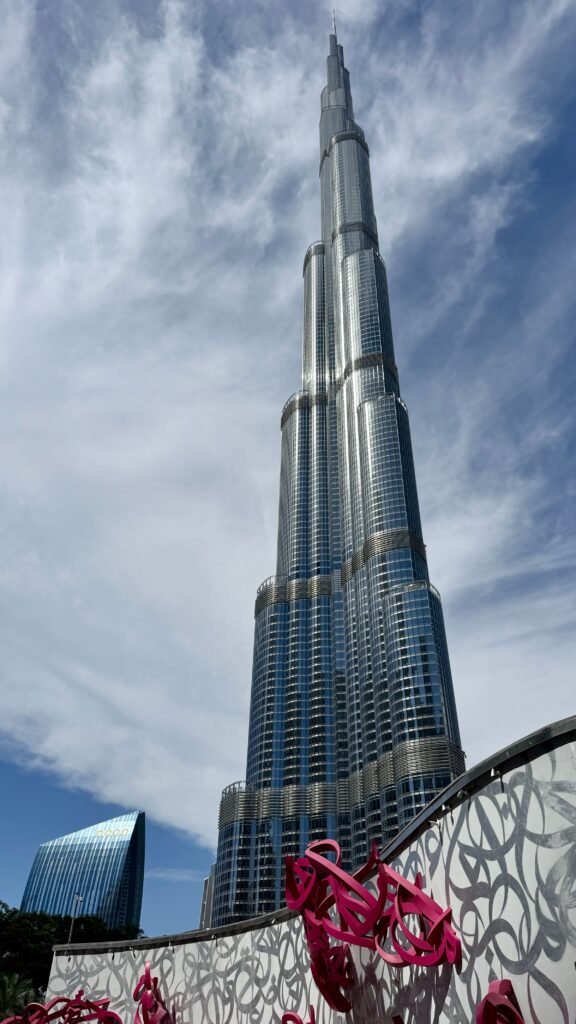
Burj Khalifa opened in 2010 and has held the title of world's tallest building ever since. It is rare for an architect to design one record-breaking tower. Smith is now watching a second rise, on the other side of the Arabian Peninsula, intended to stand well above the first.
The two buildings share a family resemblance. Both rise from a three-winged plan, and AS+GG says the three-petal footprint in Jeddah is well suited to apartments, which need generous lengths of facade for light and views. Where Burj Khalifa steps back in a spiralling series of setbacks, Jeddah Tower's wings taper as they rise, so the building narrows in a smoother line toward its top.
A bundle of leaves
The architects describe the tower's slender, subtly asymmetrical form as a bundle of leaves shooting up from the ground. The image is taken from nature: AS+GG says the shape refers to the folded fronds of young desert plants as they first grow.
It is a deliberate softening of what could have been a purely technical object. A tower of this height is shaped above all by structure and wind, and the design tries to give that engineering an image people can recognise, something closer to a plant than a machine.
The facade carries the idea down to a more human scale. On each of the three sides, a series of notches cuts into the building. The architects say these create pockets of shadow that shield parts of the tower from the sun, and they open up outdoor terraces at height. In a hot coastal city such as Jeddah, shade is a working part of the architecture rather than an ornament.
The outer skin is designed as a high-performance exterior wall, intended, according to the architects, to reduce the heat the building absorbs and so the energy needed to cool its interiors.
Built for the wind
For the tallest buildings, wind is often a harder problem than weight. When wind flows around a tall, narrow structure, it peels away from the sides in alternating swirls, a pattern engineers call vortex shedding. If those swirls form in a regular rhythm, they push the building from side to side, and the motion can build.
The answer, at Burj Khalifa and again in Jeddah, is to keep the shape changing. AS+GG says the tapering wings of Jeddah Tower produce an aerodynamic form that helps reduce the structural loads caused by vortex shedding. Because the cross-section shifts as the tower rises, the swirls find it harder to fall into a single, strong rhythm along its height.
Structural design is by Thornton Tomasetti, according to Zawya. The brief at this scale is unusual: a building that must stand more than a kilometre tall, carry dozens of lifts and stay steady enough at the top for people to live, work and look out from it.
Fifty-nine lifts and a terrace in the sky
The tower will be a vertical neighbourhood. According to The National, it will contain a luxury hotel, residences and office space. The architects' description adds serviced apartments and luxury condominiums, within a total built area of about 530,000 square metres.
Moving people through a kilometre of building is a design problem of its own. Jeddah Tower is planned with 59 lifts, a figure given by both The National and AS+GG. The architects specify 54 single-deck lifts and five double-deck lifts, in which two cabins travel one above the other and serve two floors at once, along with 12 escalators. The lifts serving the observatory are designed to travel at 10 metres per second in both directions.
That observatory is the tower's public promise. The plans include a sky terrace roughly 30 metres in diameter, which the architects say will be the highest observatory in the world. If that claim holds, the terrace would give Jeddah a viewpoint higher than any observation deck yet built.
A district on the Red Sea
The tower is the centrepiece of Jeddah Economic City, a new district in northern Jeddah. The National describes it as a 5.3-million-square-metre development of offices, residences and parks, and the tower is meant to anchor it, giving the new quarter a landmark of unusual reach.
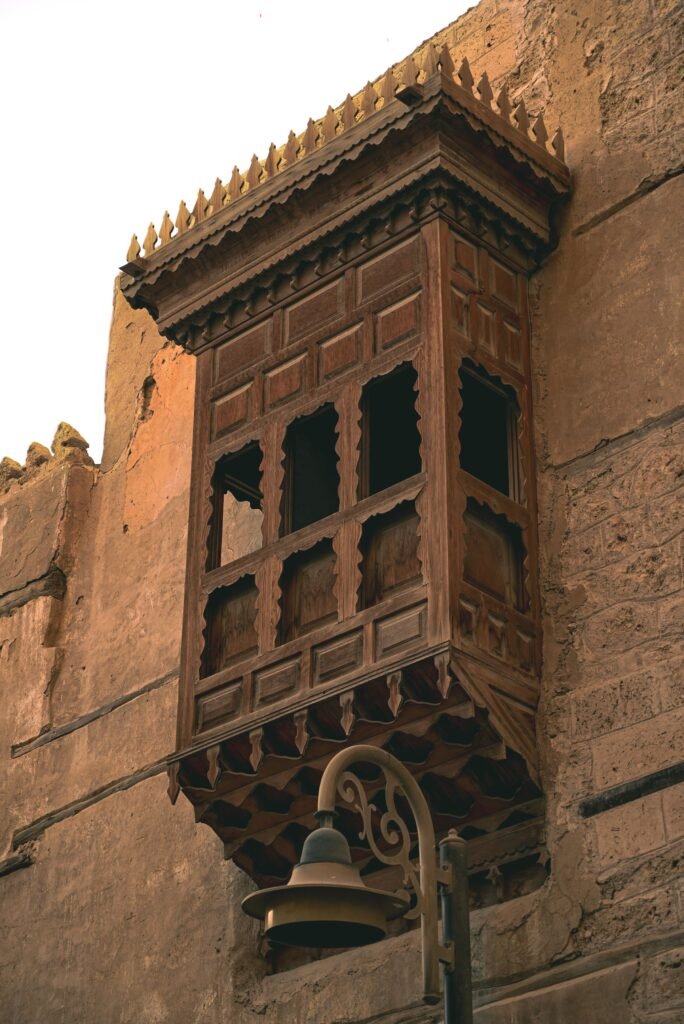
Jeddah, on the Red Sea, is Saudi Arabia's main port city and has long been the gateway for pilgrims travelling to Makkah. It also has its own tradition of building upward. In Al Balad, the historic centre, merchant families raised tall houses of coral stone with carved wooden balconies that let the sea breeze into the rooms. Jeddah Tower belongs to a different century and a vastly different scale, yet it answers the same conditions of sun, heat and coastal wind.
The Gulf's race for height
Jeddah Tower is not the only tall project in the region's pipeline. The National notes that Dubai's Burj Azizi is planned at 725 metres, also for completion in 2028, while the proposed Dubai Creek Tower, once intended to pass 1,000 metres, has been delayed. The newspaper counts at least five more megatall skyscrapers planned around the Gulf.
What sets Jeddah apart is the threshold. No building over a kilometre high has ever been completed. Burj Khalifa brought the title of world's tallest to the Gulf in 2010. If Jeddah Tower is finished as planned, the title will stay in the region, moving from the UAE to Saudi Arabia, and the architect who set the last record will have set the next.
Toward 2028
Construction is on track for completion in 2028, The National reports. Between now and then the tower must more than double its present height, adding its upper floors and the sky terrace that will crown the climb.
For now, the number to watch is the one that changes month by month. At more than 430 metres, Jeddah Tower has passed the middle of the world's tallest building. The rest of its climb, if the schedule holds, will take it into territory that no building has yet reached.
Sources: The National, Adrian Smith + Gordon Gill Architecture, Zawya