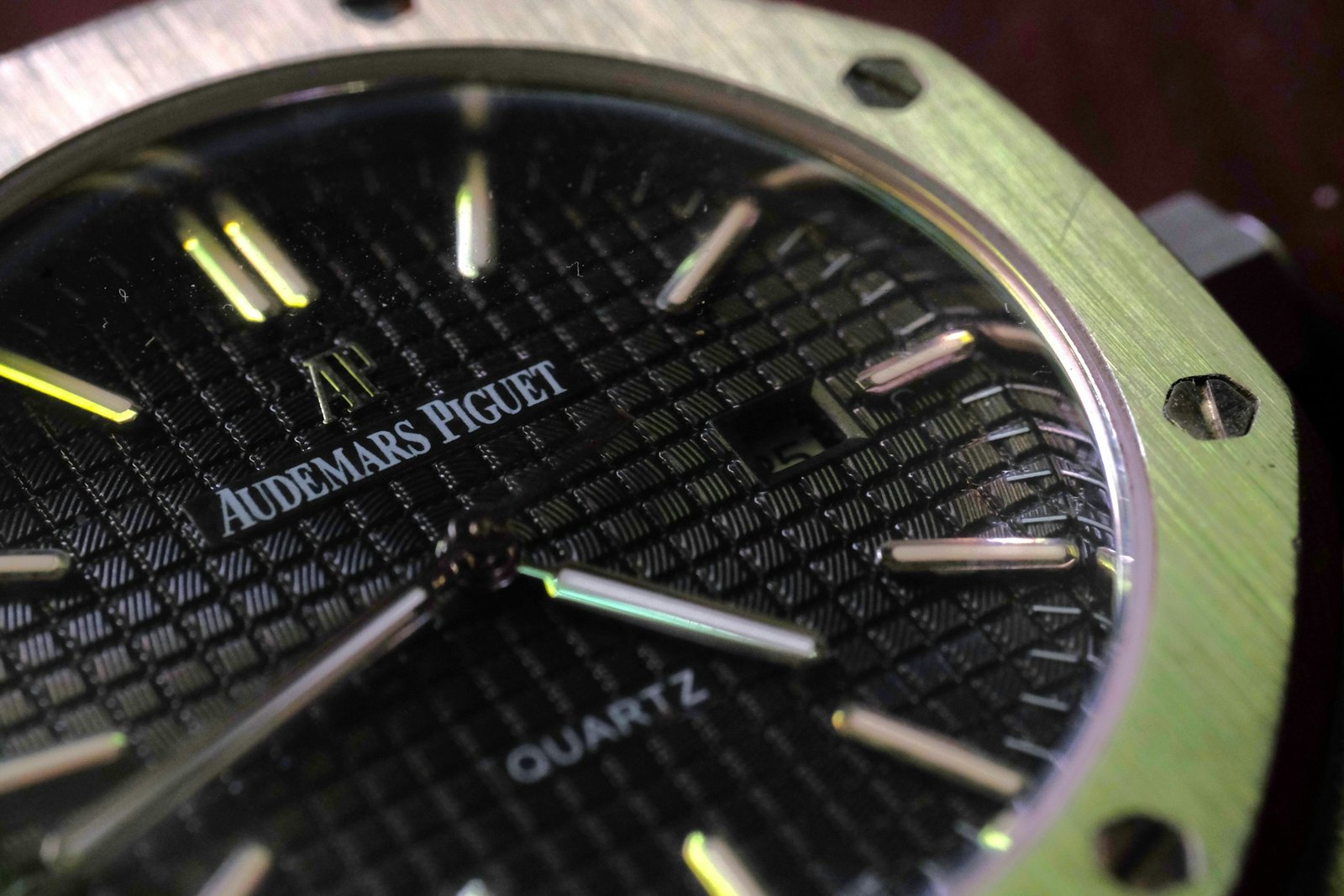
In April 1972, at the Basel watch fair, Audemars Piguet showed a watch that many people in the room thought was a mistake. It was made of steel, the metal of tool watches and everyday pieces. It had an octagonal bezel held down by eight exposed screws. Its bracelet flowed directly out of the case as if the two were a single object. And it was priced well above many gold dress watches of the day.
The watch was the Royal Oak, and it began a category that now dominates the luxury watch business: the steel sports watch made, finished and priced as a precious object.
A difficult decade
To understand why anyone would attempt such a thing, it helps to remember the moment. The early 1970s were a frightening time for Swiss watchmaking. Cheap, accurate quartz watches from Japan were arriving, and many mechanical makers would close within the decade. The old certainties, gold dress watches for formal life and practical steel watches for everything else, were breaking down.
Audemars Piguet, a small family house from the Vallée de Joux, needed something new. It turned to Gérald Genta, a Geneva designer with an unusual gift for giving watches a strong, almost architectural shape.
The octagon
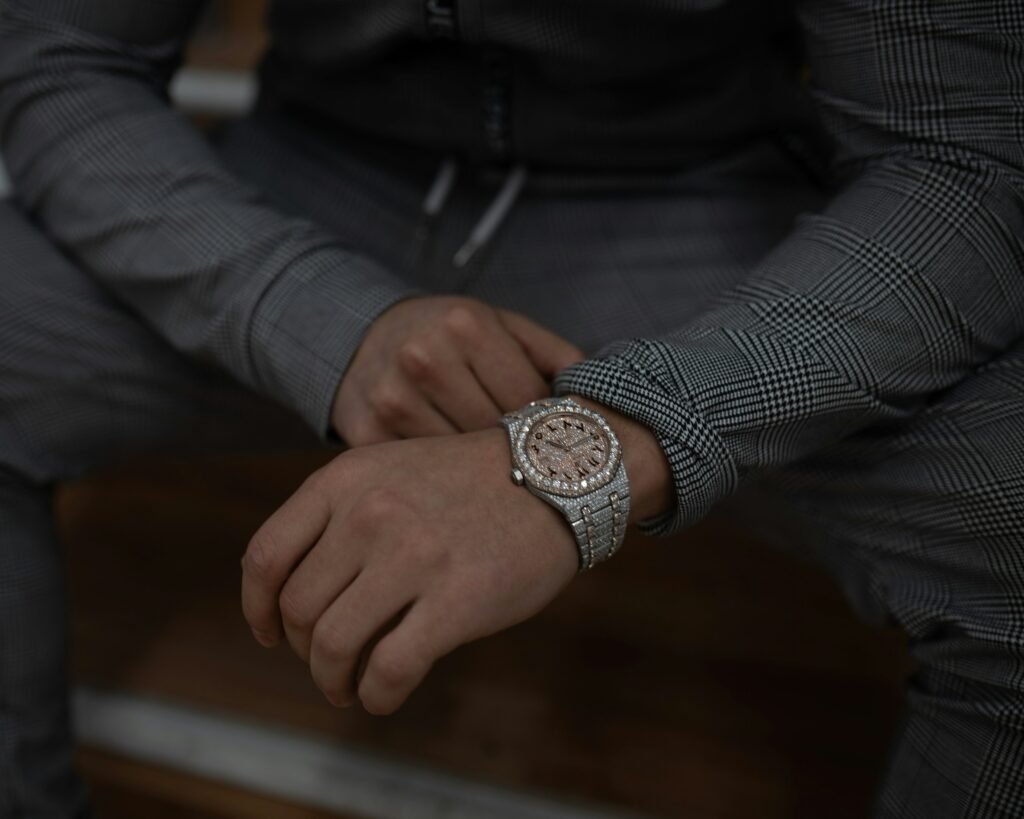
Genta's design took its name and shape from the sea. The Royal Oak was named after a line of British warships, and its octagonal bezel is often compared to the shape of a diving helmet's porthole, bolted down with visible screws. The dial was covered in a fine checkerboard pattern called tapisserie, cut by machine on a guilloché lathe. The case was large for its time, 39 millimetres, which earned the first model, reference 5402ST, its later nickname: the Jumbo.
What made it special was not any single element but the finishing. Every surface alternated between brushed satin and mirror polish, with sharp bevels where the two met. This is slow, expensive work, normally reserved for precious metals. Applying it to steel was the provocation. It said that luxury lay in the making, not in the material.
The porthole
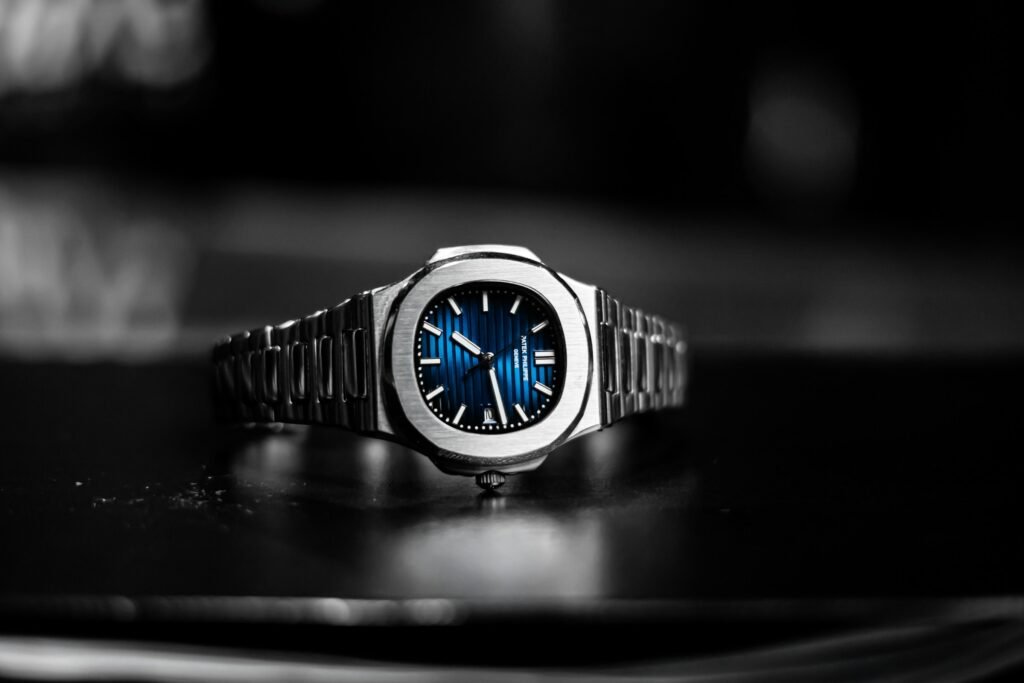
Four years later, Patek Philippe followed with the Nautilus, also designed by Genta. Its shape was inspired by a ship's porthole: a rounded octagonal bezel with two small hinges, or ears, on either side of the case, like the fittings that secure a porthole window. Its dial had horizontal ribs, its bracelet was again integrated, and it too was steel, priced and finished as a luxury watch.
Patek's early advertising leaned into the paradox. It presented the Nautilus as a watch for every occasion, as comfortable with a wetsuit as with a dinner jacket. That flexibility is exactly what made the category last. A luxury sports watch is the watch for people who do not want to change their watch when they change their clothes.
Other houses followed. Vacheron Constantin introduced its 222 in 1977, designed by Jörg Hysek, and Genta himself drew further sports watches for other brands. The template was set: steel, an integrated bracelet, a strong geometric bezel and finishing far beyond the ordinary.
Slow success, then frenzy
These watches were not immediate bestsellers. They were expensive, unfamiliar and, to traditional buyers, slightly strange. For years they sold steadily rather than spectacularly.
Their moment came much later. From the 2000s onwards, as dress codes relaxed and the idea of a single daily watch took hold, the steel sports watch became the most desired object in the industry. Waiting lists grew long, prices on the second-hand market climbed above the shop price, and in 2021 Patek Philippe announced that it was discontinuing the best-known steel Nautilus, a decision that only deepened the obsession with it.
The frenzy has cooled a little since then, but the category has not. Almost every major house now makes a steel sports watch with an integrated bracelet, and new designs are judged, inevitably, against the two originals.
Why they still matter
It is tempting to dismiss the luxury sports watch as fashion, and the market around it has certainly had its excesses. But the original idea deserves respect. In the middle of a crisis, two old houses decided that the value of a watch lay in design and craftsmanship rather than in the weight of its metal. That idea was radical then and has proved right since.
The best way to appreciate one is not on a screen but in the hand. Look at the edge where a brushed surface meets a polished bevel, at the way each bracelet link is finished on its sides as well as its top, at how the case catches light from every angle. That is where the cost went in 1972, and it is still where it goes today.
Wearing one well
A steel sports watch is meant to be worn, not saved. It suits a linen shirt in Doha as well as a suit in London, and it looks better with a few scratches on its bracelet than with none. If you own one, the only rule is to use it. That, after all, was the whole point.