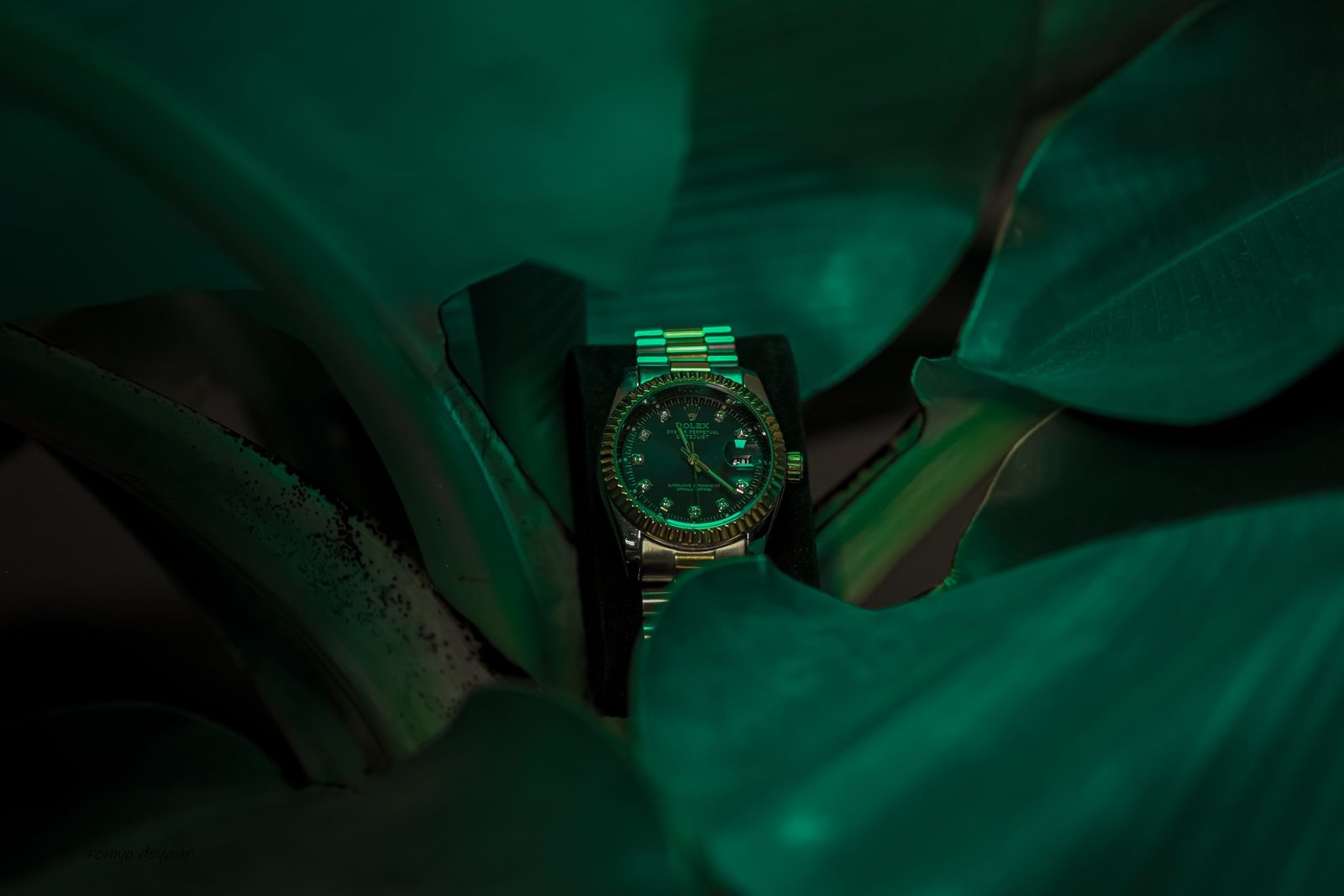
Look at a catalogue of fine watches from the 1960s or 1980s and you will see dials in white, silver, cream, black and occasionally blue or champagne. Green is almost absent. It was considered too unusual, too difficult to read, perhaps too informal for a serious watch.
Today, green is everywhere. Almost every major house offers green-dial versions of its best-known models, collectors talk about olive, forest, mint and emerald with the seriousness once reserved for movements, and green dials often sell out faster than any other colour. How did it happen?
An anniversary that started a fashion
The turning point is usually traced to 2003, when Rolex marked the fiftieth anniversary of the Submariner with a Submariner Date that had a green bezel and a black dial. Green had long been Rolex's corporate colour, on its boxes, its signage and its tags, so in a sense the company was simply putting its own colour on its most famous watch.
The anniversary model quickly became sought after, and in 2010 Rolex went further with a version that had both a green dial and a green bezel. By then the idea had taken root. Green, it turned out, was not too unusual for a serious watch. It was exactly unusual enough.
Why green works
Part of the appeal is novelty. After decades of black, white and blue, green looked fresh. But novelty fades, and green has lasted, which suggests something deeper.
Green sits in an interesting place on a dial. It is a colour with depth: in a sunburst finish, where fine lines radiate from the centre, a green dial can look almost black in shade and bright emerald in sunlight. It pairs well with both steel and gold, cool against one and warm against the other. And it carries associations that most people find pleasing: nature, growth, calm.
Green is the colour of something growing. On a dial, it makes a watch look alive.
The olive moment
In 2021, Patek Philippe announced the end of production of the most famous steel Nautilus, and released a final version with an olive green dial. It became one of the most talked-about watches of the year and confirmed that green was no longer a passing trend but a permanent part of the language of luxury watches.
Since then, green has appeared everywhere: on dress watches and divers, on chronographs and perpetual calendars, in steel, gold and titanium. Some makers use deep, almost black greens; others prefer pale, minty shades, or rich emerald lacquer. Each says something different, and part of the pleasure is finding the green that suits you.
How a green dial is made
Colour on a dial is harder to get right than it looks. Most modern dials begin as thin discs of brass. The colour is then added in one of several ways: by galvanic treatment, in which the dial is plated in a chemical bath; by layers of transparent lacquer, sprayed and polished by hand; or, less often, by enamel fired in a kiln.
The finish beneath the colour matters as much as the colour itself. A sunburst finish, brushed in fine lines from the centre outwards, catches the light and makes the green shift as the wrist moves. A grained or matte finish gives a softer, more even tone. Green is notoriously difficult to reproduce consistently from batch to batch, and makers often reject many dials before they find a shade they are happy with. When you see two green dials of the same model side by side, small variations are not unusual, and some collectors seek out a particular shade.
Green in the Gulf
Green has a particular resonance in the Arab world. In a landscape of sand and stone, green has always meant water and life: the date palm, the oasis, the irrigated garden. It is a colour of welcome and of plenty, and it appears throughout the region's visual culture, from tiles and textiles to the painted doors of old houses.
Perhaps that is why green dials have found such enthusiastic buyers here. A green watch on a sunny afternoon, catching the light against a white kandura sleeve, looks entirely at home.
Choosing a green watch
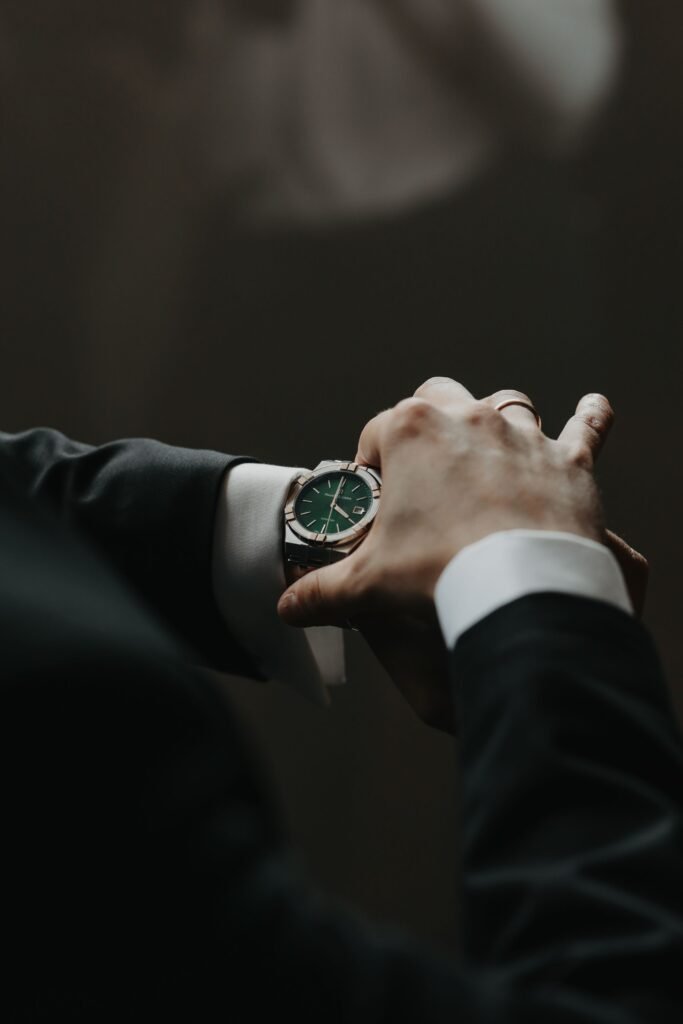
If you are tempted, start by looking at the dial in different light. A sunburst green that looks dark and serious indoors can turn bright and lively in sunshine, which is wonderful if you like that variation and less so if you want consistency. Matte and grained green dials are more even.
Consider the case metal. Green with steel looks crisp and sporty; with yellow or rose gold, it becomes richer and more formal. Think about straps too: a green dial on a brown leather strap is one of the most elegant combinations in watchmaking.
And do not worry that green is a fashion that will pass. A colour that has spent twenty years growing in popularity, and that rests on such old associations, is not going anywhere. A well-chosen green watch will look as good in twenty years as it does today.