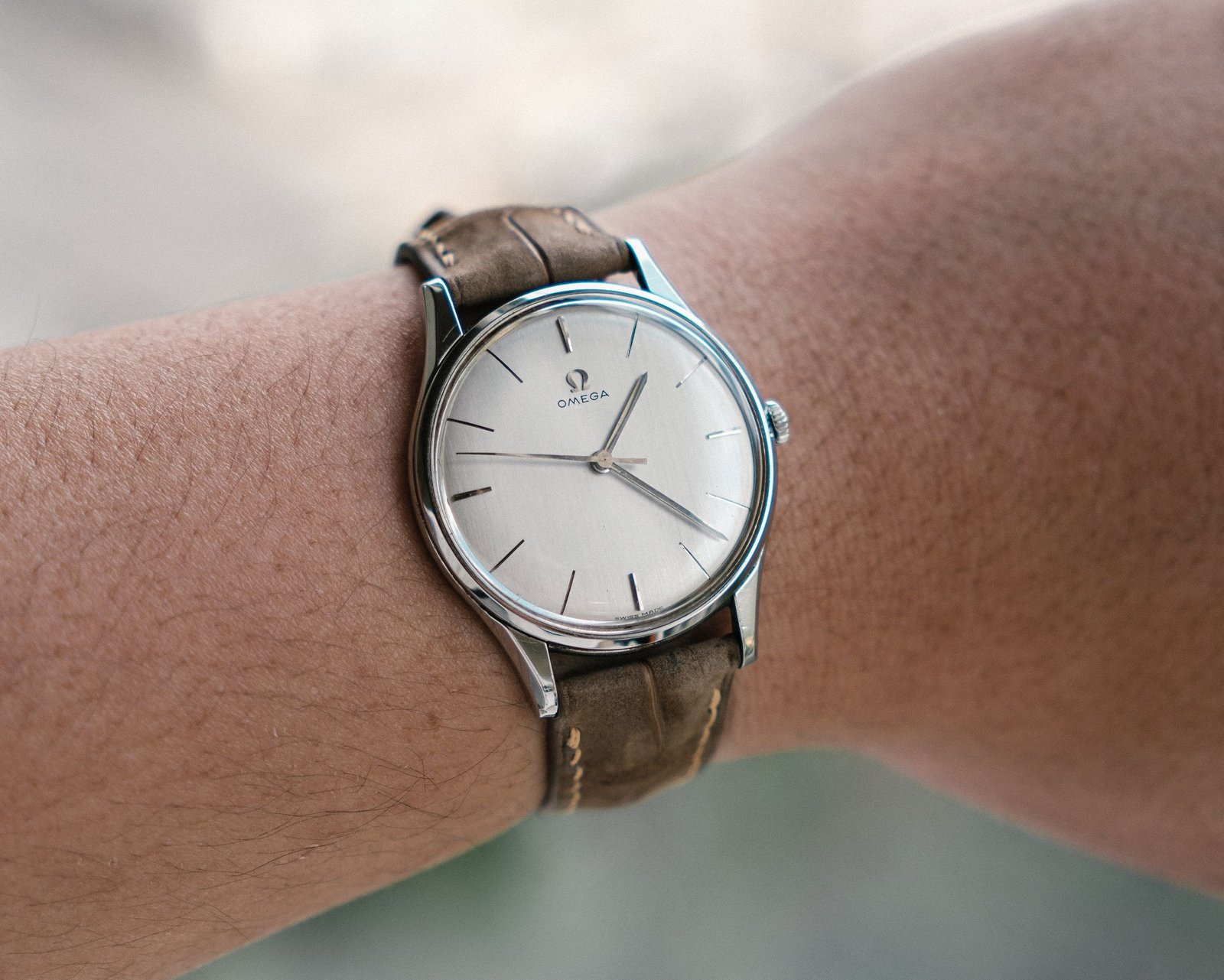
Walk through any airport lounge in the Gulf and look at the wrists. You will see a great many steel sports watches, chronographs and divers, most of them large, most of them on heavy bracelets. They are fine watches, often superb ones. But every so often you will notice something different: a slim gold watch on a leather strap, its dial almost bare, sliding easily in and out of a shirt cuff. It is quieter than everything around it, and somehow more confident.
That is the dress watch, and it deserves a defence.
What makes a dress watch
There is no strict definition, but most dress watches share a few qualities. They are thin, usually under ten millimetres and sometimes much less, so that they fit under a cuff. They are modest in diameter, typically between 34 and 39 millimetres. Their dials are simple: hours, minutes, perhaps small seconds or a discreet date. They are usually in precious metal, though steel ones exist, and they are almost always worn on a leather strap.
Above all, a dress watch does not try to do anything except tell the time beautifully. It has no rotating bezel, no tachymeter, no water resistance worth mentioning. A good dress watch does not announce itself. It waits to be noticed.
A short history of restraint
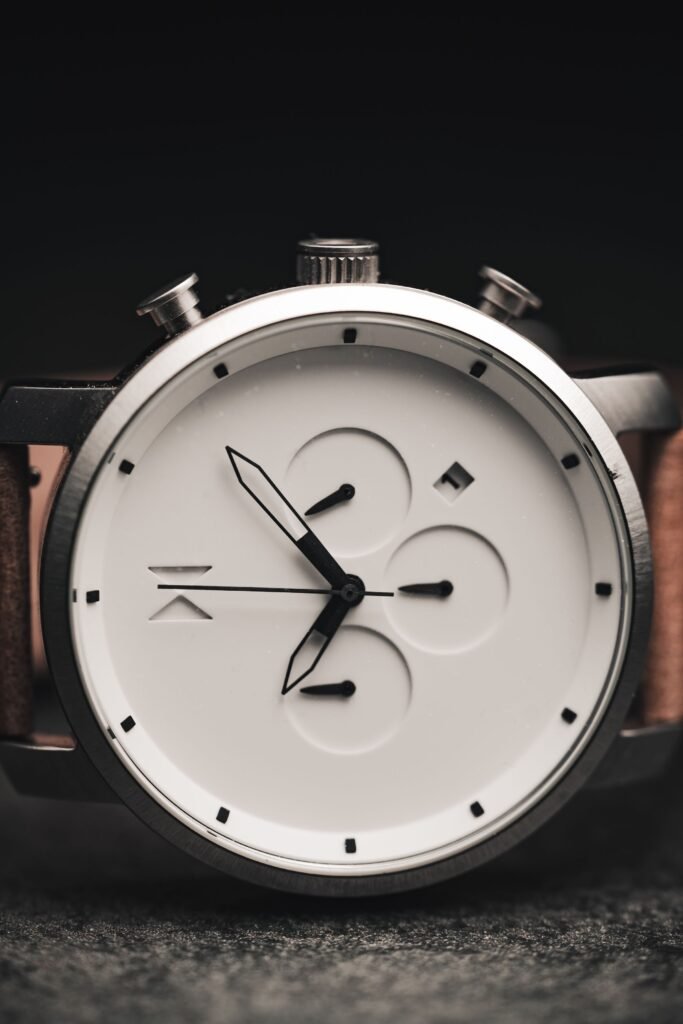
The modern dress watch took shape in the 1930s, as wristwatches finally replaced pocket watches for formal wear. Patek Philippe's Calatrava, introduced in 1932, is often cited as the archetype. Its round case, clean dial and fine hands reflected the influence of the Bauhaus idea that form should follow function, and it has been made in many versions ever since.
The decades after the Second World War were a golden age for thin watches. Watchmakers competed to make movements ever slimmer, and in 1957 Piaget introduced a hand-wound calibre only about two millimetres thick. Three years later it produced an automatic movement barely thicker. These were not marketing gestures but genuine feats of engineering: every part had to be redesigned so that it could work in so little space.
In the 1970s and 1980s, as quartz watches and then large sports watches took over, the dress watch fell out of fashion. It never disappeared, but for a long time it looked old-fashioned.
Why it is coming back
Something has changed in the past few years. Collectors who spent a decade chasing sports watches have discovered the pleasure of something smaller. Vintage dress watches, once inexpensive, have risen in value. Young watchmakers have made thin, elegant watches the centre of their work.
Part of the reason is simple contrast. When every wrist carries a large sports watch, a small gold one looks distinctive. Part of it is comfort: a light watch on a soft strap is pleasant to wear all day, especially in a warm climate. And part of it is a growing appreciation for the difficulty of making something simple well. On a plain dial there is nowhere to hide. Every proportion, every hand and every marker has to be right.
Wearing one in the Gulf
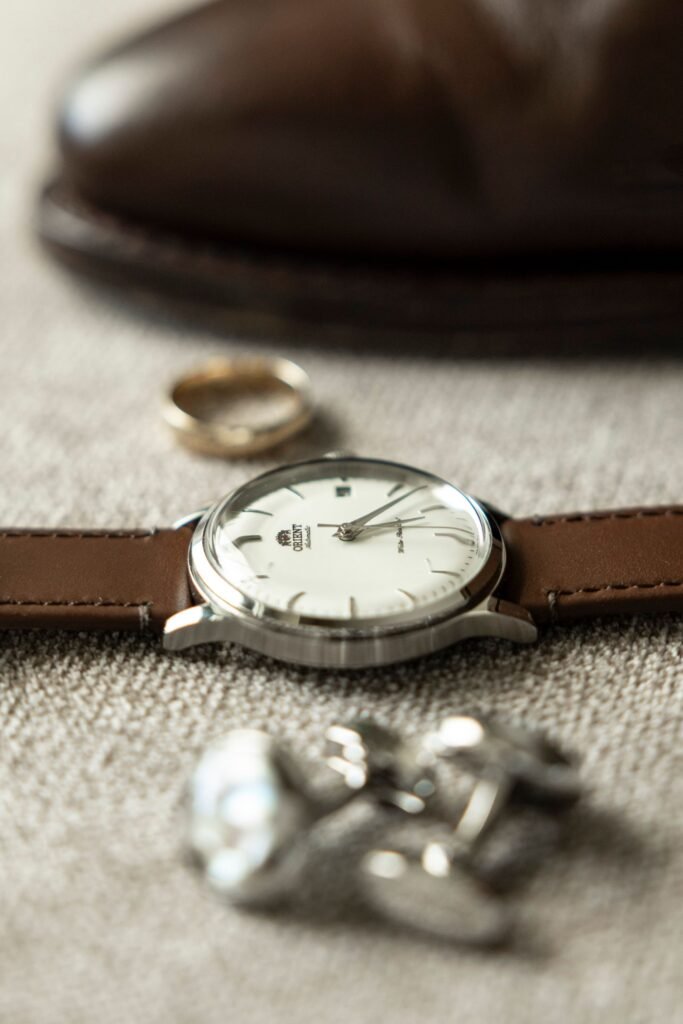
A dress watch suits the region better than its reputation suggests. It pairs naturally with the kandura or thobe, slipping under a sleeve without catching, and with the lighter tailoring that summer demands. A gold case on a brown or black strap looks right at a wedding, at a majlis and at a business dinner alike.
The one caution is the strap. Leather and heat do not always get along. In summer, consider a second strap and alternate between them so that each can dry, or choose a strap with a lining designed to resist moisture. A good watchmaker can fit a new strap in minutes, and changing it is one of the simplest pleasures of owning a dress watch.
How to choose one
Start with size. Try watches on rather than relying on numbers. A 36 or 38 millimetre watch can look perfectly proportioned on most wrists, and slightly smaller is often more elegant than slightly larger.
Then look at the dial. The best dress watch dials are plain but not empty: applied markers that catch the light, a subtle texture, slim hands that reach exactly to the markers they point at. Avoid dials crowded with text.
Consider the movement. Many fine dress watches use hand-wound movements, which are thinner than automatics and invite a small daily ritual of winding. If you would rather not think about it, a thin automatic works well.
Finally, choose the metal you will enjoy. Yellow gold is classic and warm, rose gold softer, white gold and platinum more discreet, and steel the most practical. There is no wrong answer, only the one that feels right on your wrist.
The quiet watch
A dress watch is not for every occasion. You would not take it diving or climbing. But for the hours that matter most, a wedding, a meeting, a dinner with someone important, it is often the best choice. It says that you know exactly what time it is, and that you have nothing to prove.