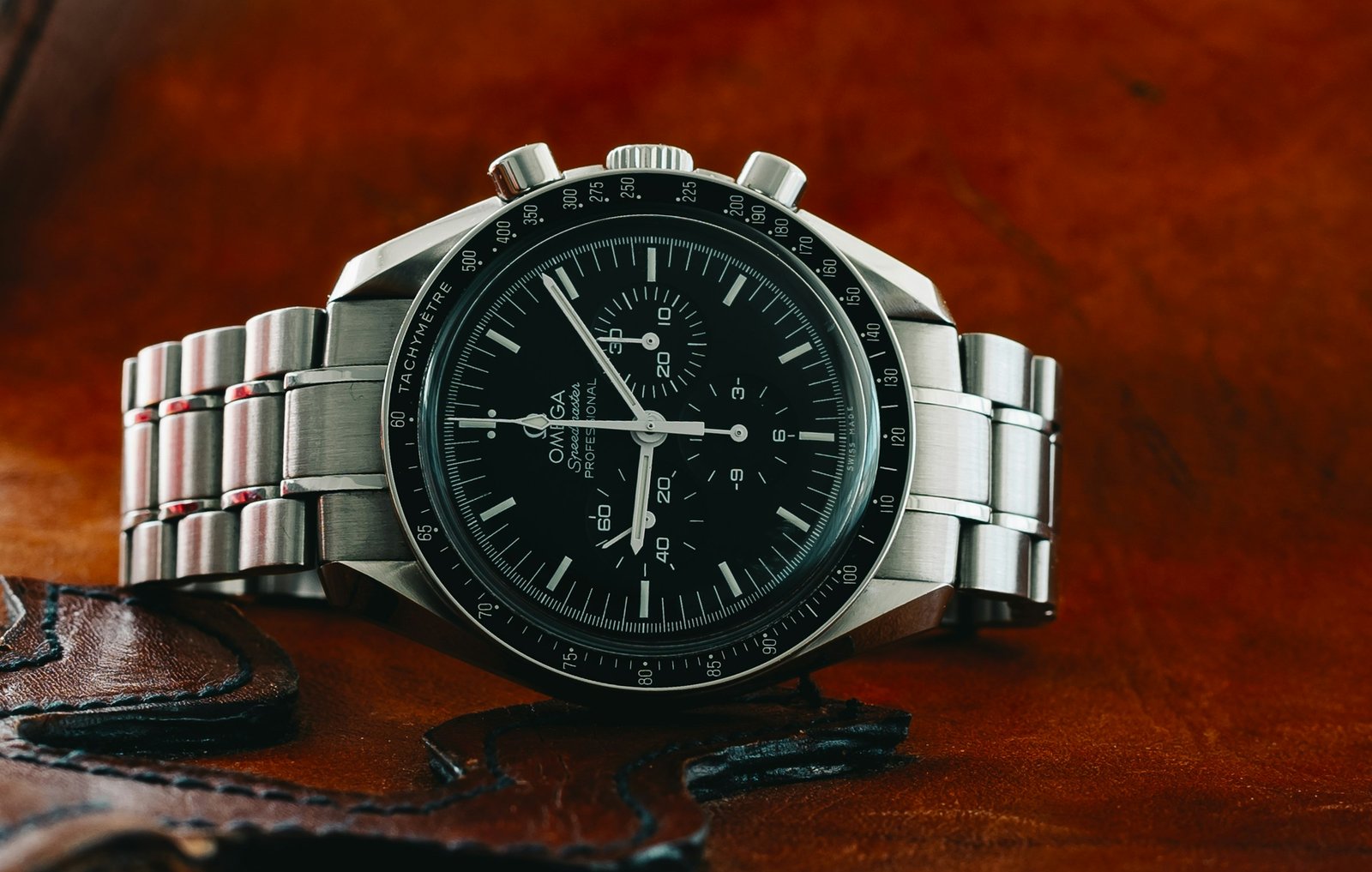
Some watches are associated with places, some with people. The Omega Speedmaster is associated with an event that most of the world watched on television: the first human steps on the Moon, on 21 July 1969. It is one of the few luxury objects whose fame rests not on advertising but on a historical record.
A chronograph for racing
The Speedmaster was introduced in 1957 as a sports chronograph, aimed at racing drivers and engineers. Its defining feature was a tachymeter scale engraved on the bezel rather than printed on the dial, so that a driver could measure speed over a known distance at a glance. It had a black dial, large luminous hands and a robust hand-wound movement, the calibre 321, which was already respected for its reliability.
At the time, nobody was thinking about space. The watch was simply well built, clear to read and tough, qualities that would matter more than anyone could have guessed.
The NASA tests
By 1964, the American space programme needed a chronograph its astronauts could rely on during missions. NASA did not commission a watch. Instead, it bought several commercially available chronographs from different makers and put them through a series of tests designed to destroy them.
The watches were heated and frozen, exposed to vacuum, high humidity, corrosive oxygen, shocks of many times the force of gravity, acceleration, pressure and intense vibration. Some stopped. Some lost their crystals. The Speedmaster kept running within acceptable limits, and on 1 March 1965 it was declared flight-qualified for crewed space missions.
It was chosen not because it was beautiful but because it was the only one that survived. Within months, in June 1965, the astronaut Ed White wore one on the outside of his spacesuit during the first American spacewalk.
On the Moon
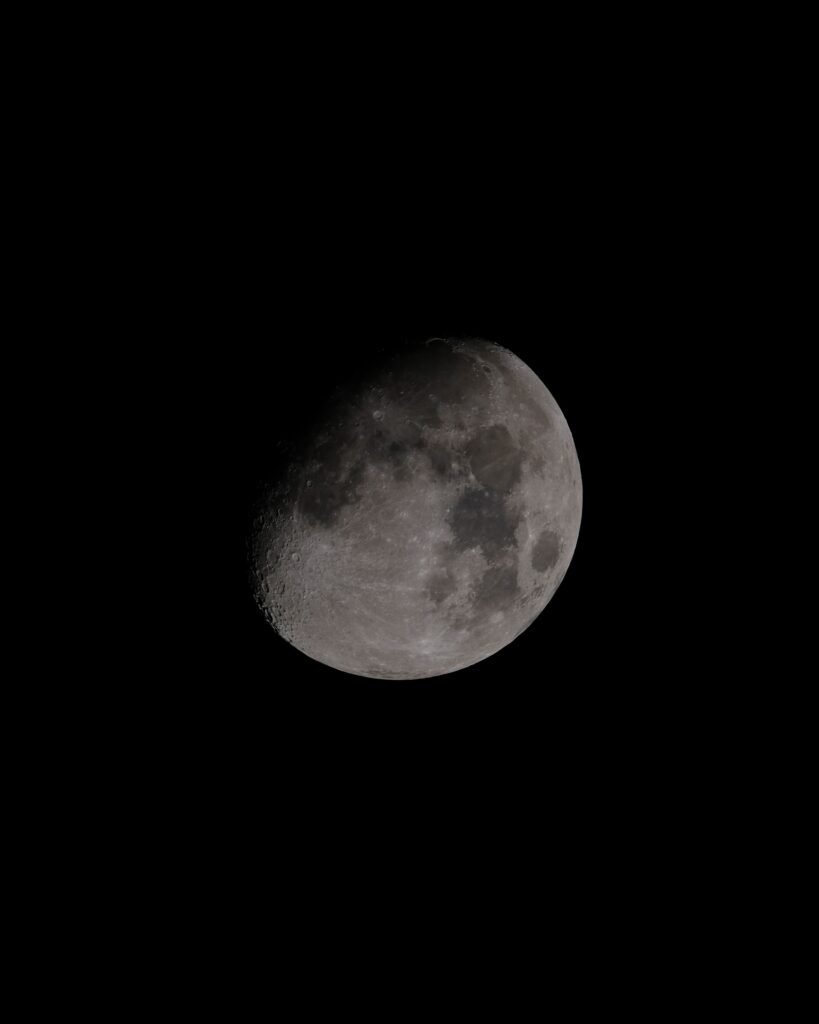
When Apollo 11 landed on the Moon in July 1969, both Neil Armstrong and Buzz Aldrin had Speedmasters. Armstrong left his inside the lunar module as a backup, because the module's electronic timer had developed a fault. Aldrin wore his outside, strapped over his spacesuit, as he stepped onto the lunar surface. It became the first watch worn on the Moon, and the name Moonwatch followed naturally.
Aldrin's watch has a melancholy footnote: it went missing in the 1970s, apparently in transit to the Smithsonian, and has never been found.
Apollo 13
The Speedmaster's most dramatic moment came the following year, in April 1970. After an oxygen tank exploded on Apollo 13, the crew had to power down most of their spacecraft's systems to save electricity and make a series of engine burns to correct their course home. One of these burns had to last exactly fourteen seconds, and it was timed by the crew using a Speedmaster.
The mission returned safely, and Omega later received the Snoopy Award, an honour given by NASA astronauts for contributions to flight safety. It is the story that turns the Speedmaster from a souvenir into a tool that mattered.
The watch today
The Speedmaster Professional is still made, and it is still recognisably the same watch: an asymmetrical case, a black dial with three sub-dials, a tachymeter bezel and a manually wound movement, because the version that flew had no automatic winding. The movement has changed over the decades, from the calibre 321 to the 861 in 1968, and more recently to a modern co-axial calibre, but the experience of winding it each morning, and of using the pushers to start, stop and reset the chronograph, is much as it was.
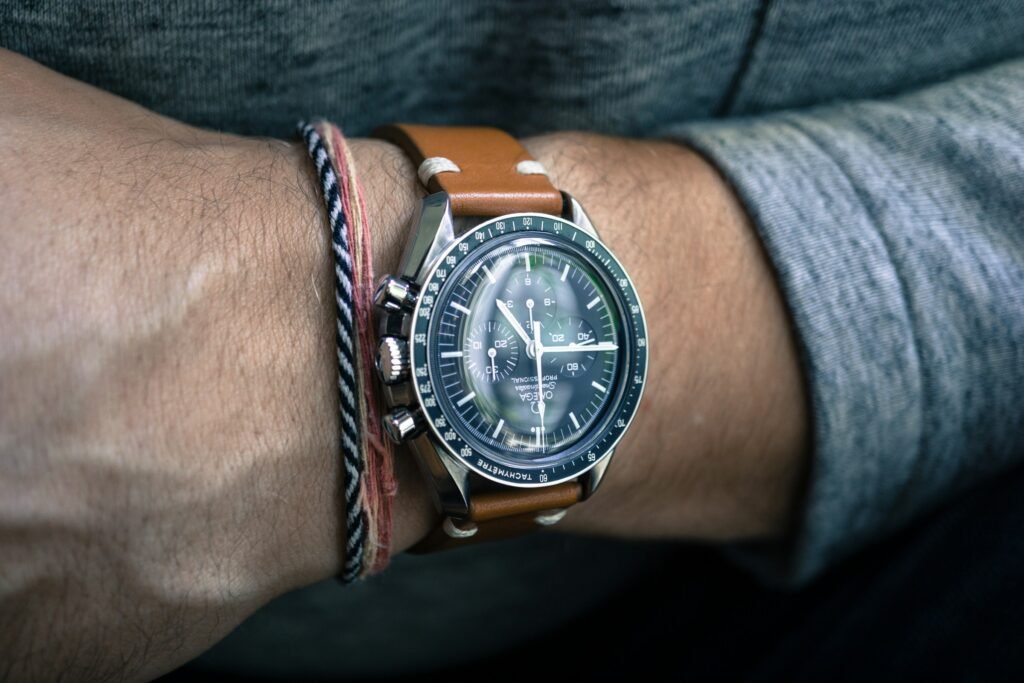
That continuity is the source of its appeal. A Moonwatch bought today is, in all important respects, the watch that went to the Moon. Few historical objects are available to anyone who walks into a shop.
Variations worth knowing
Over the decades Omega has made many versions of the Speedmaster, and some are worth knowing about. The Mark II of 1969 placed a similar movement in a barrel-shaped case with a bezel protected under the crystal. Several special editions have celebrated the Snoopy Award with the cartoon dog on the dial or case back. Black ceramic models, beginning with the Dark Side of the Moon in 2013, gave the design a modern edge. And there have been versions in gold, with different dial colours and with smaller cases.
For a first Speedmaster, though, most collectors would point to the standard Professional on a steel bracelet or a simple strap. It is the version closest to the watches that flew, and it needs no explanation.
Wearing a piece of history
For many collectors, the Speedmaster is the first chronograph and often the one they keep. It is the right size for most wrists, it works with almost anything, and it carries a story that is easy to tell and impossible to embellish, because the facts are remarkable enough.
There is something fitting about wearing it in the Arab world, where astronomy has deep roots and where the night sky over the desert remains one of the great sights on Earth. Look up at the Moon on a clear night, then at the dial, and remember that the same design once kept time up there.